How to Make Your Very Own Fanorona Board

We decided that the best way to get a copy of Fanorona was to make one as copies seem to retail for £50+. I was quite happy with the end product so want to show you how to do it for anyone out there who wants the same but doesn’t want to spend that kind of money.
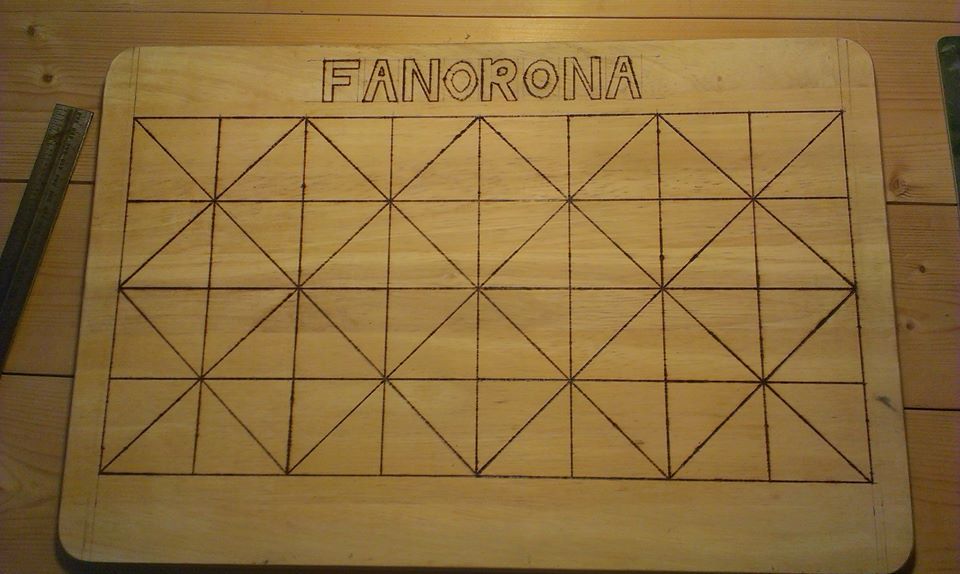
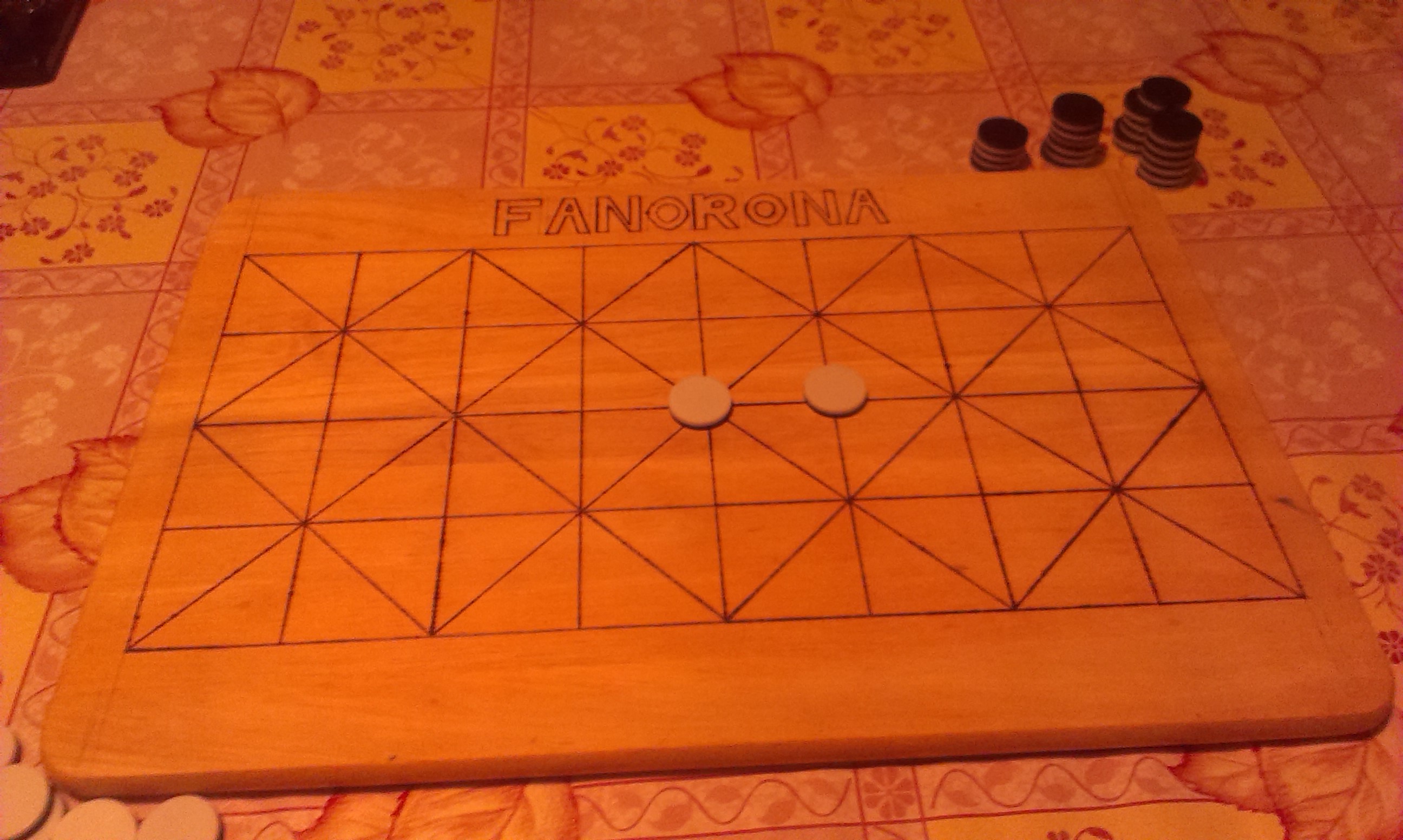
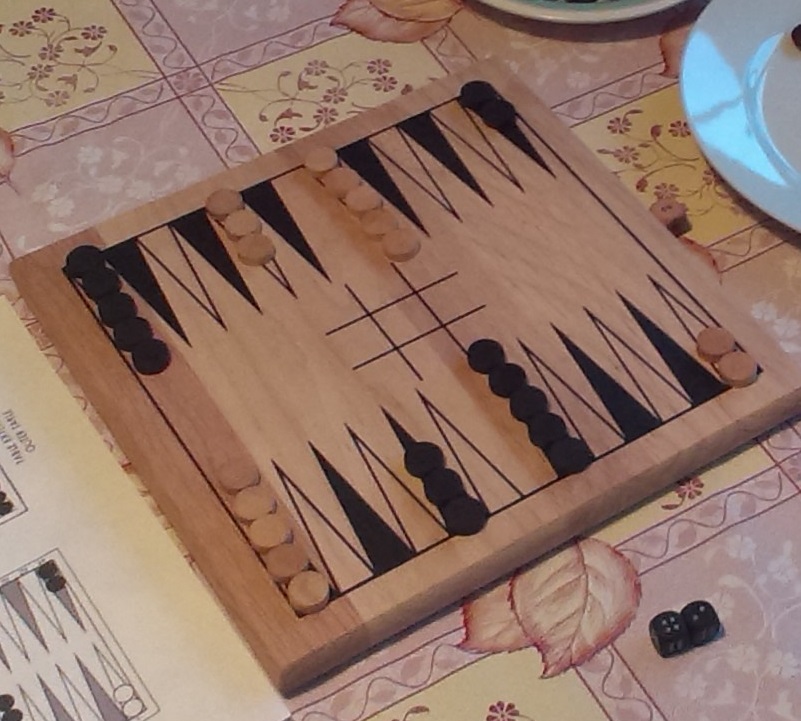
Our home made Fanorona board. Made on a chopping board using a soldering iron to brand.

What You Will Need:

  1. A board – For this I used a chopping board. I was lucky enough to have recently been given an old one that I sanded down and used. However if you don’t have an old one that you can use you can buy one or any piece of wood no less than 34cm x 20cm. This will allow you to make the grid of 4cm x 4cm squares with space left around the edges. Anything less that a 4cm x 4cm square is going to be hard to play on and personally I recommend a 5cm x 5cm square (which is what I used as my board was 44cm x 39cm).
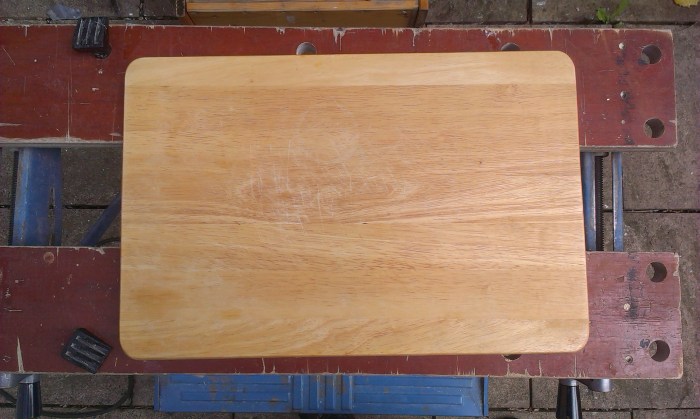
    The original scratched up chopping board I was given
    The original scratched up chopping board I was given
  2. Pieces – It is important to decide what pieces you are going to use on the board as this will affect the size of the squares you use. I would recommend Othello pieces as these aren’t difficult to come by, especially on places like eBay, or, if you already own an Othello set you can just borrow them from it costing you nothing. Also they are a nice 2.5cm in diameter which is smaller than a lot of Draughts pieces you can buy and so easier to play with.
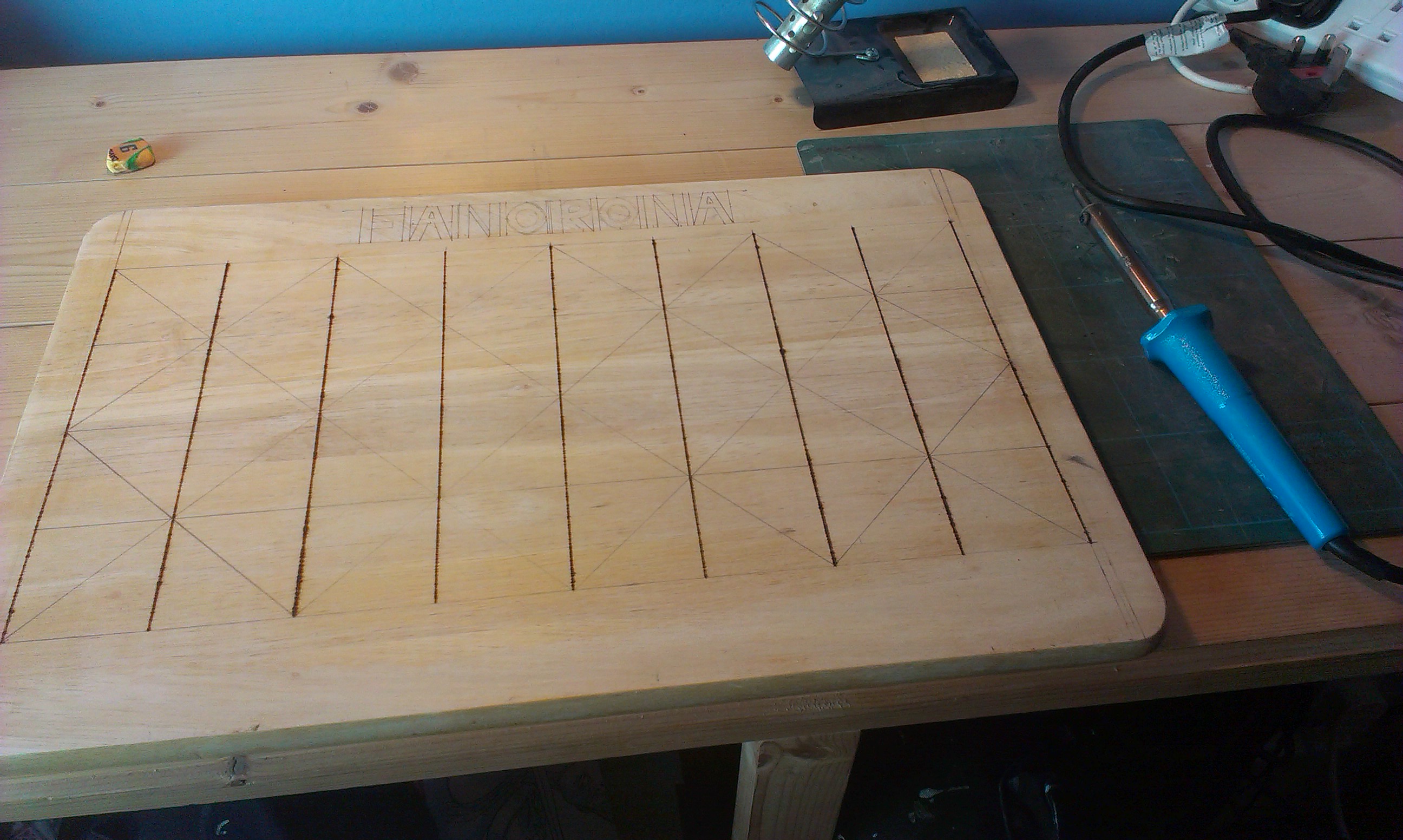
  3. A Soldering Iron – to brand the board. I used a 40 watt Iron with a brand new pointed tip.
  4. A Metal Ruler – to keep the soldering iron straight as you brand.
  5. Pencil – for drawing the design on to the board.
  6. A Heat Proof Glove – to protect your hand when your holding the ruler next to the soldering iron. I just used a heavy duty gardening glove as the aim is not to touch the soldering iron against the glove, the glove is there just in case.
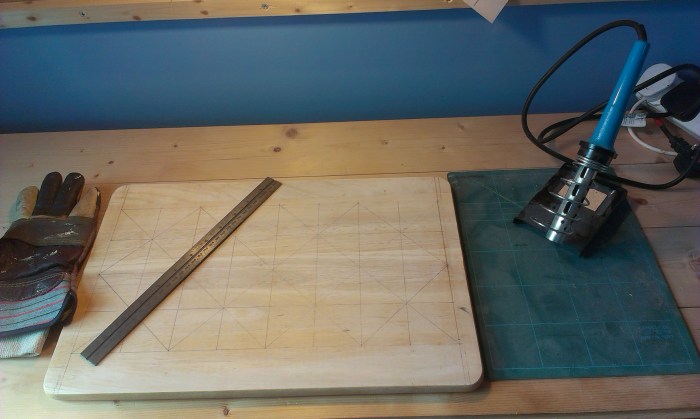
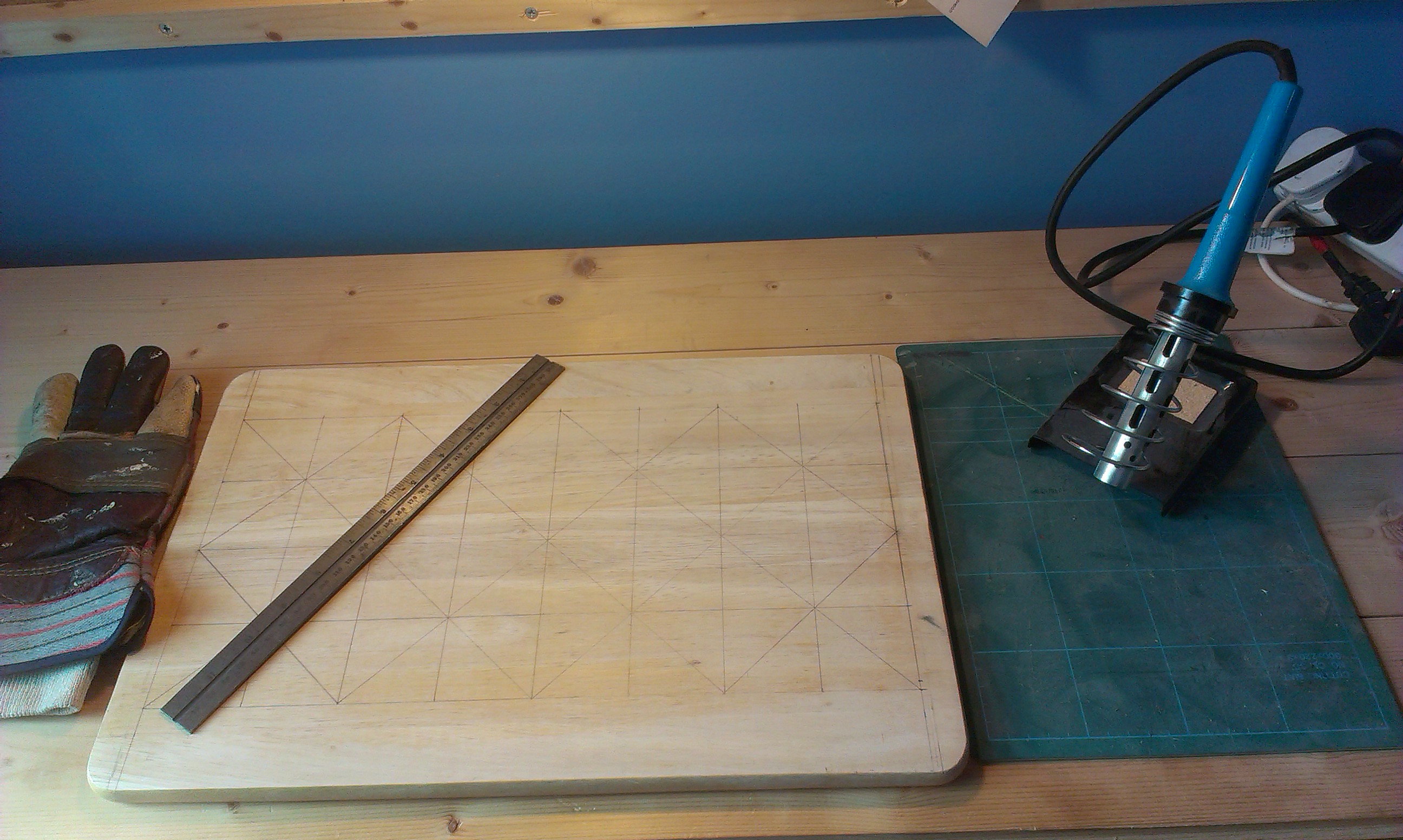
    The soldering Iron, Metal Ruler, Glove and board ready to go.
    The soldering Iron, Metal Ruler, Glove and board ready to go.
  7. Sand Paper or An Electric Sander – You will only need these if your board has been previously used or is coated in varnish or something. You will use these to remove any previous scratches or and varnish.
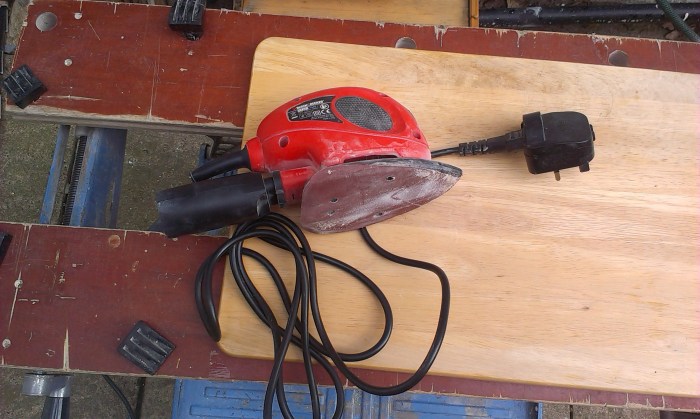
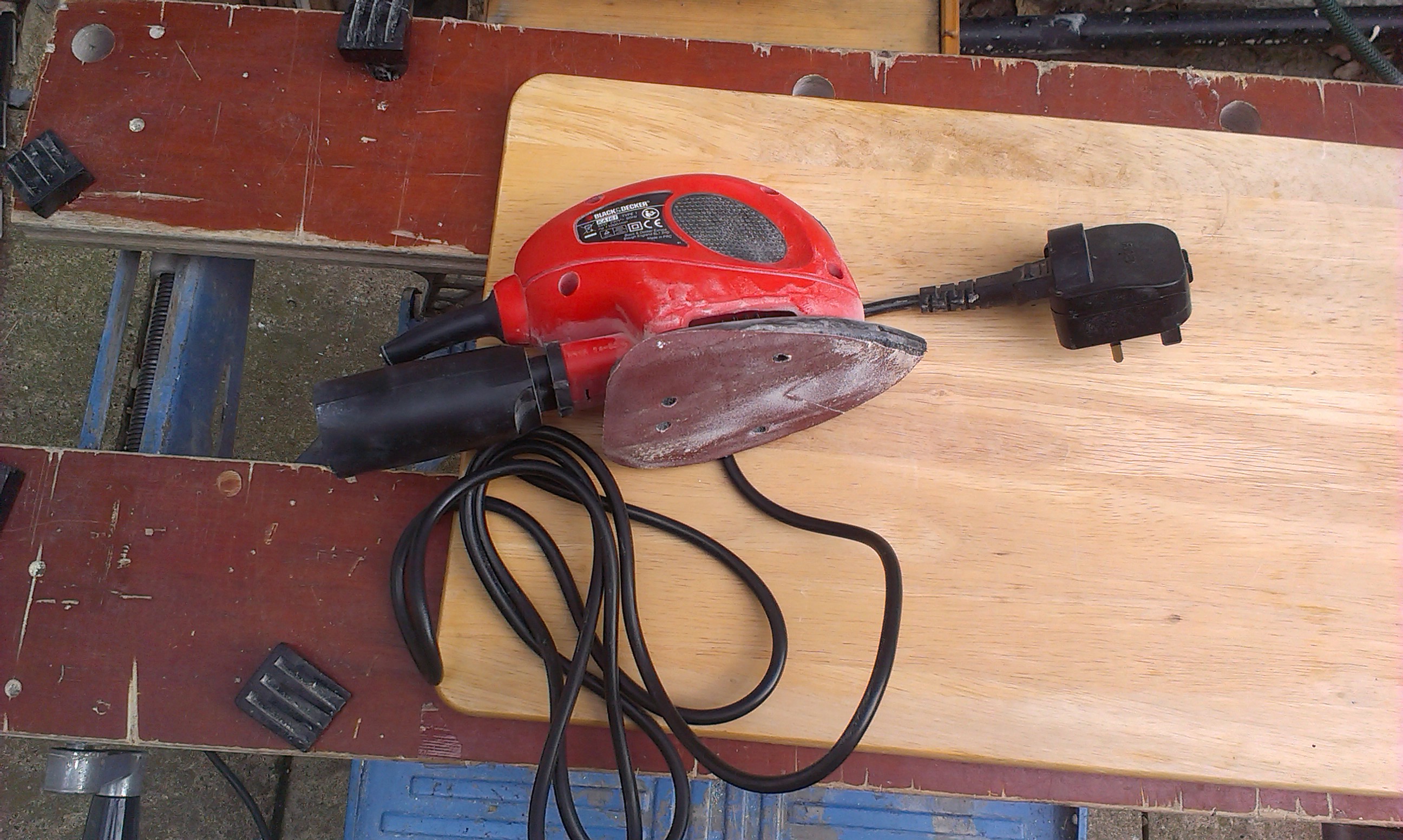
    The electric sander I used to remove the scratches and marks.
    The electric sander I used to remove the scratches and marks.
  8. Varnish – Optional depending on how you choose to finish your board.
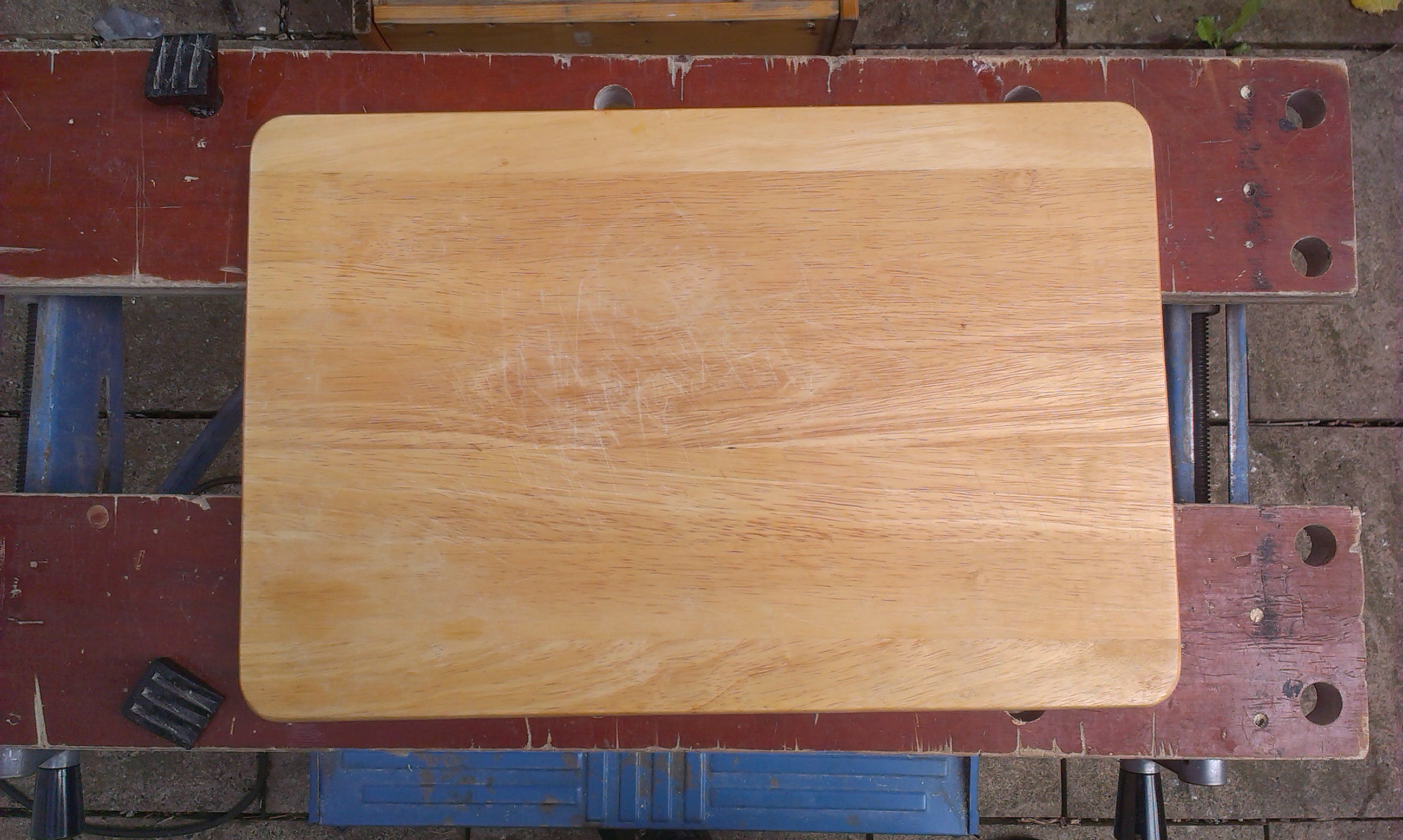
Step One – Preparation:

If you have a brand new piece of wood with no coating skip points one and two.

  1. Sand the board down to remove any scratches, marks or varnish finishing.
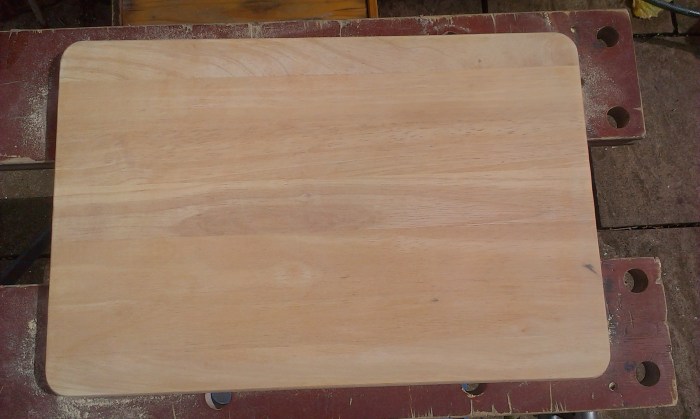
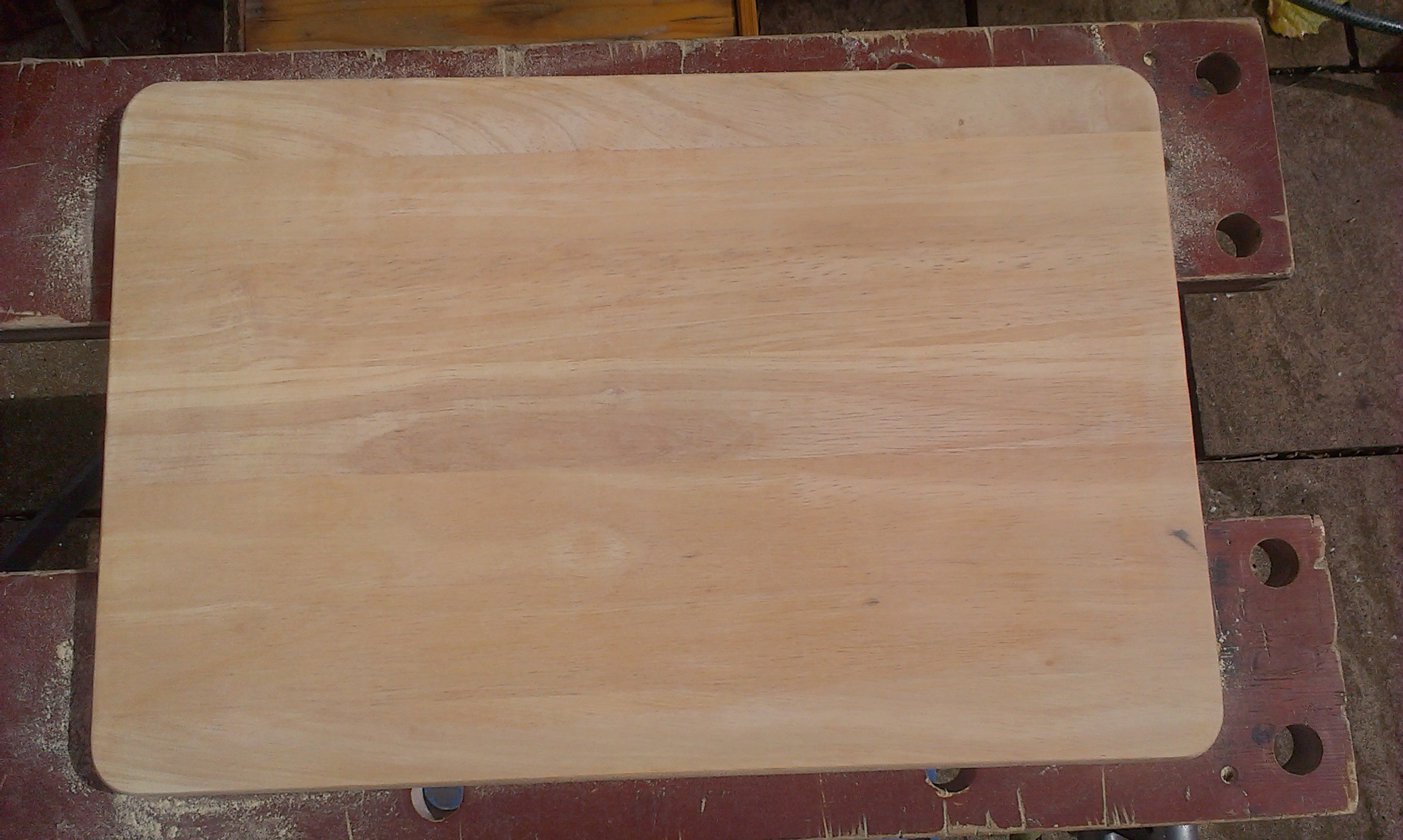
    The board after it had been sanded.
    The board after it had been sanded.
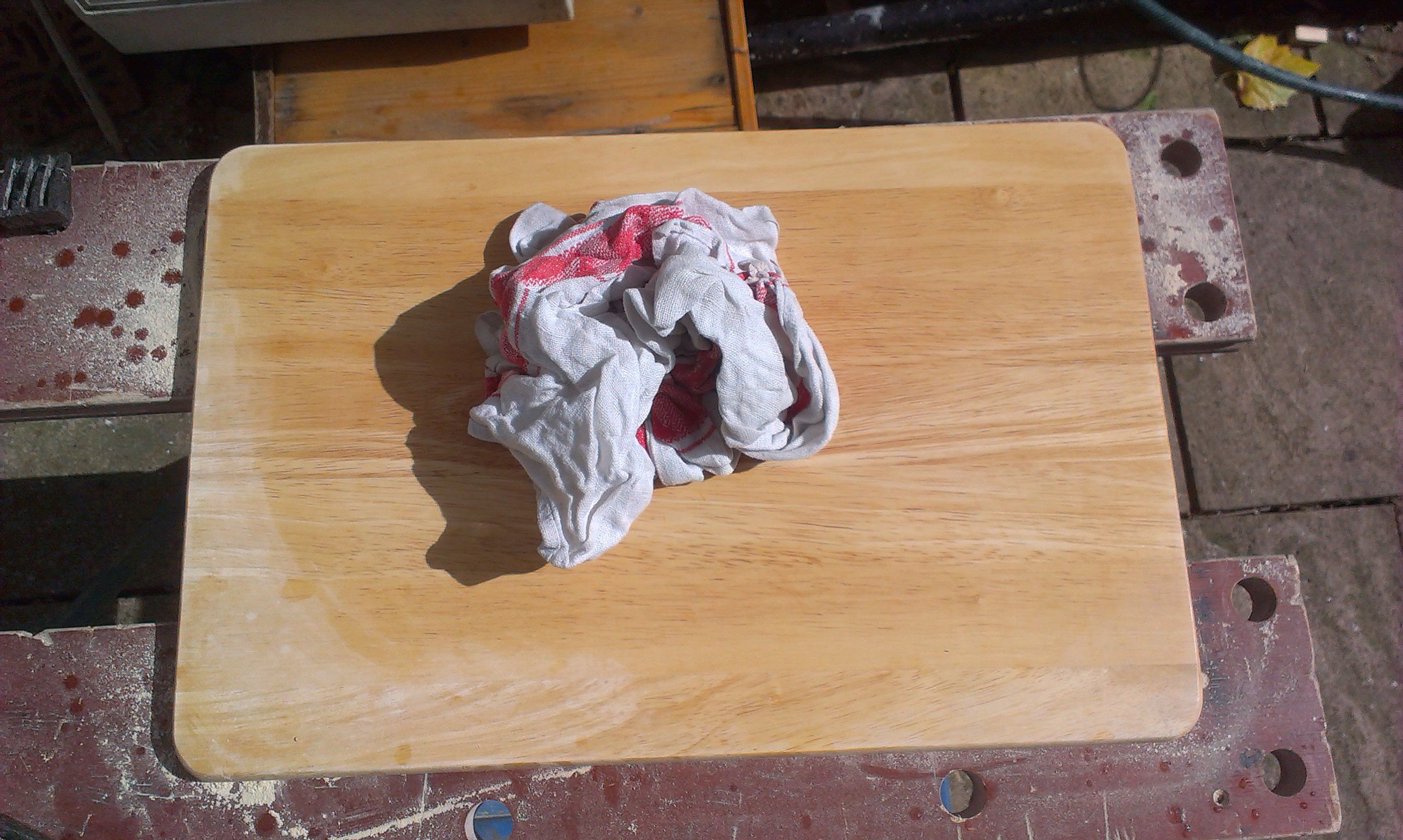
  2. Then wipe the board down with a damp cloth to remove any dust left from the sanding process.
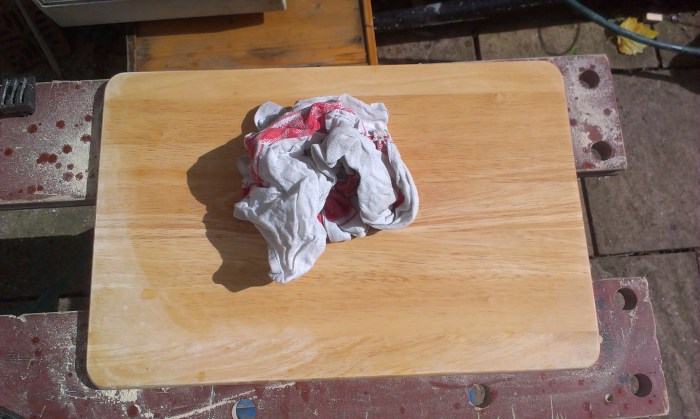
    Use a damp cloth to get rid of any dust.
    Use a damp cloth to get rid of any dust.
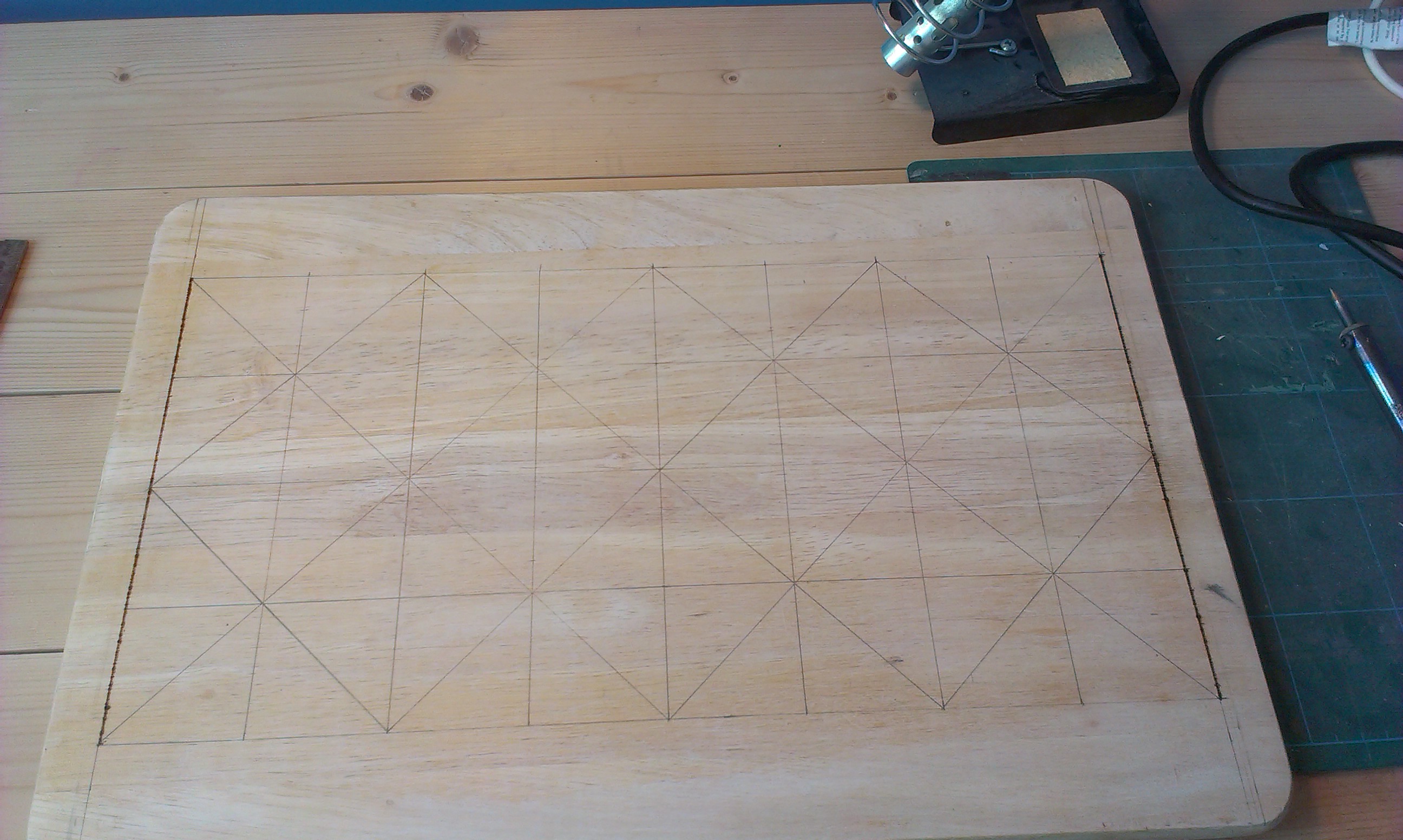
  3. Draw out the design. The board is made up of a grid of squares of eight across and four down. Depending on the size of your piece of wood the size of this board is going to vary. If you are making it with 5cm x 5cm squares you need to measure the length of the board take away 40 and divide the remaining number by two (e.g. 48 – 40 = 8/2 = 4) you then measure that amount in from each side and draw vertical lines. These are your two vertical edges. You then do the same horizontally except taking away 20 rather than 40. This gives you your horizontal lines.
  4. You then join the top and bottom lines and the left and right lines at every 5cm (if you are working to a 5cm x 5cm scale) interval until you have a full grid.
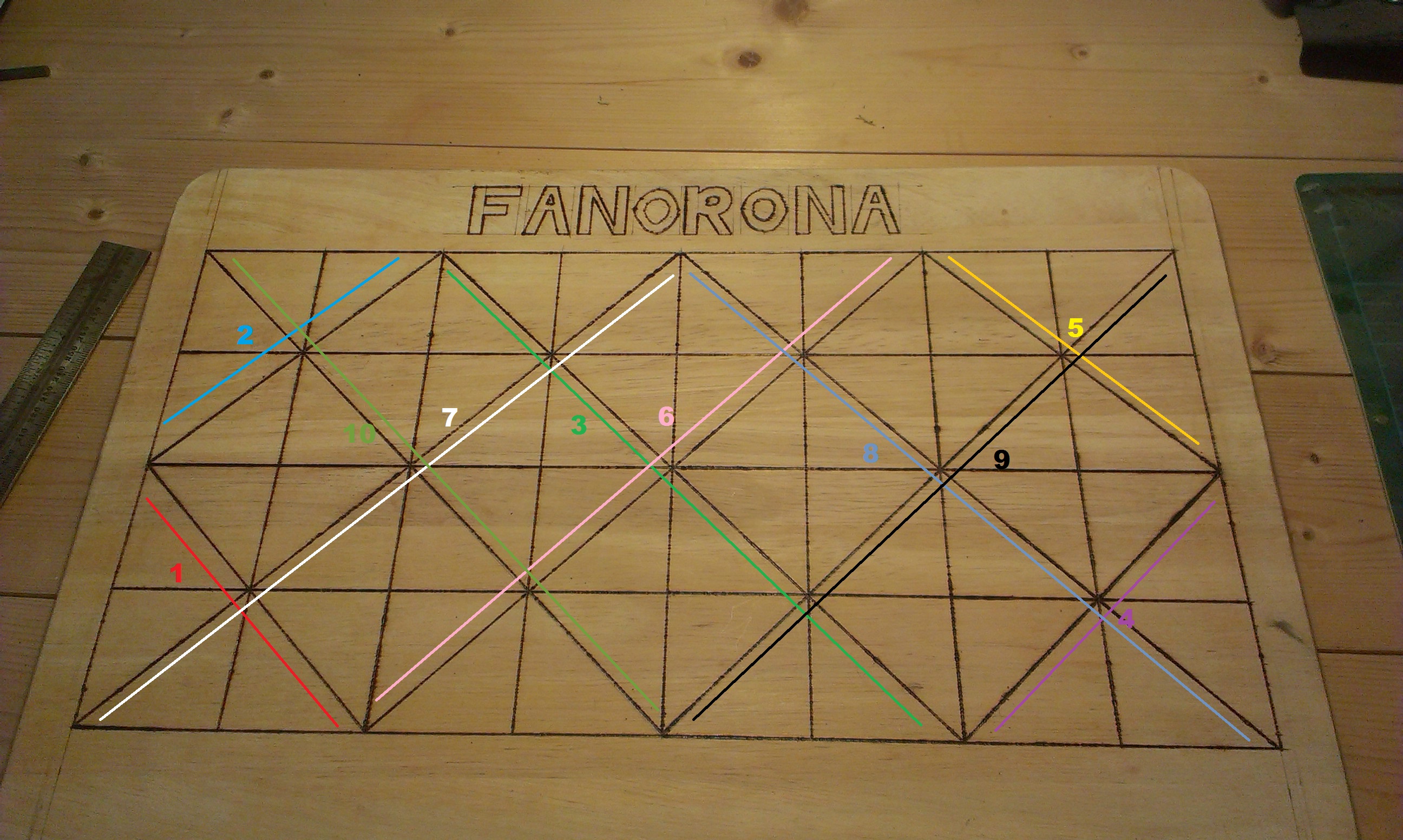
  5. Lastly you draw ten diagonals as shown on the picture bellow.
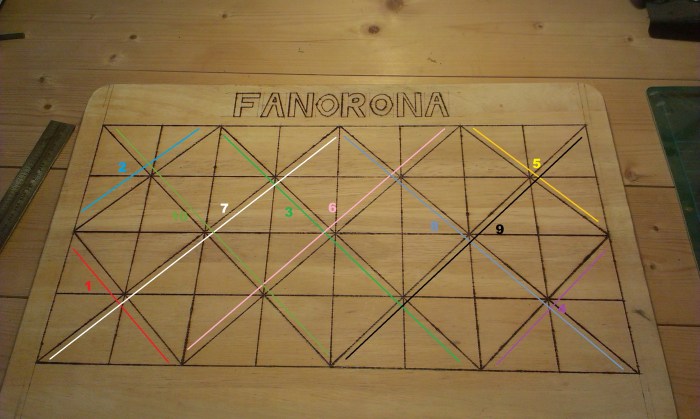
    Follow the numbers starting from the bottom left.
    Follow the numbers starting from the bottom left.
Step Two – Branding:

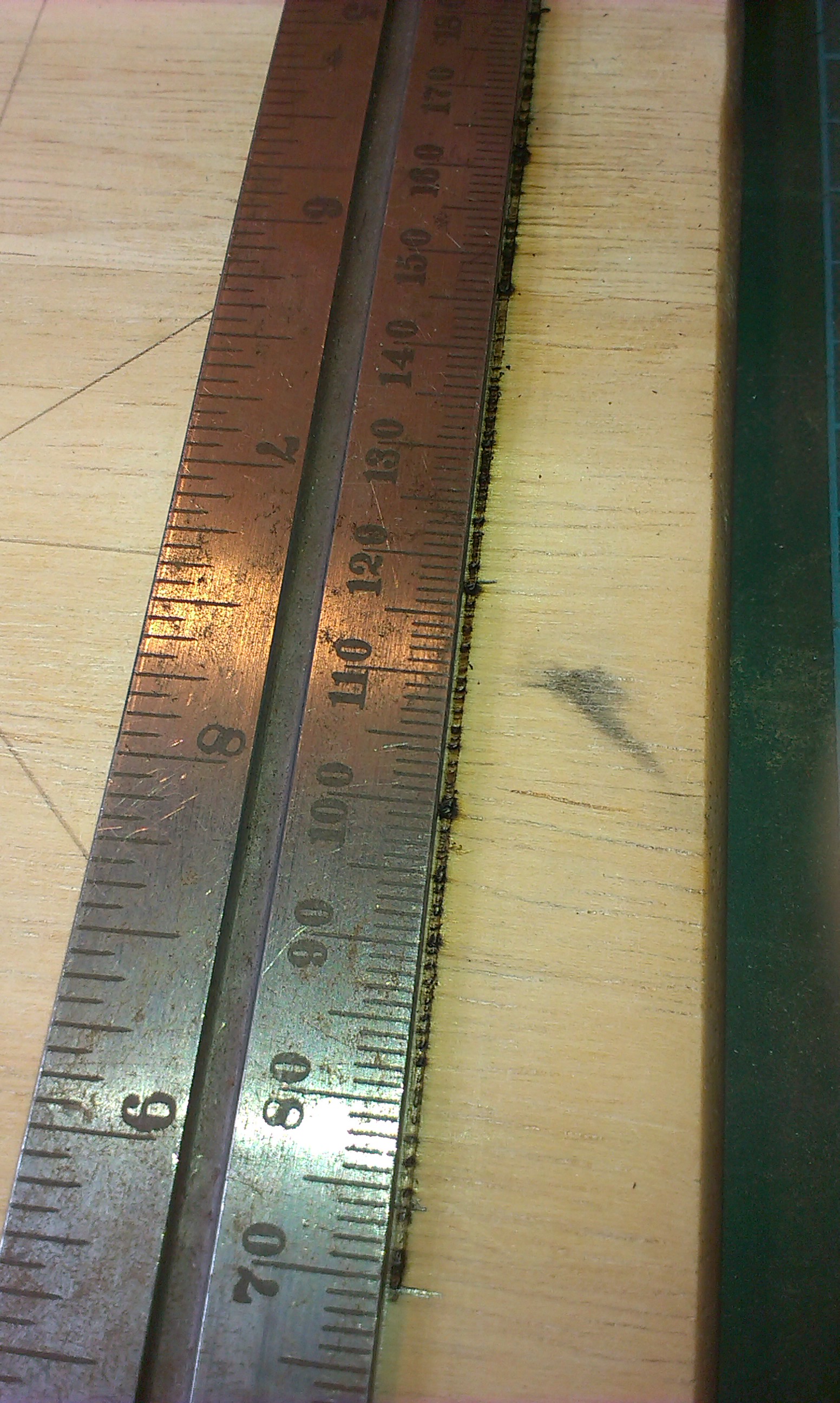
  1. Now comes the tedious part. You need to let your soldering iron heat up as much as possible, put on your glove and hold the metal ruler in place next to your first line, make sure it is not on top of the line as the soldering iron tip will burn next to where the ruler is.
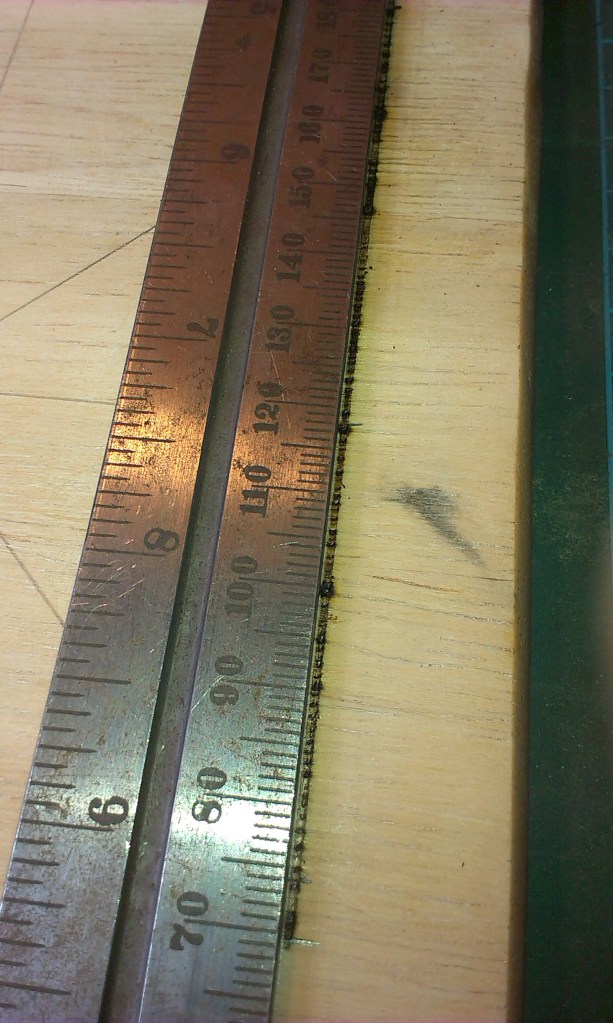
    The ruler next to the burnt line.
    The ruler next to the burnt line.
  2. Then you apply the soldering iron to the wood. Be careful as you don’t want to burn the wood too much but it is also a slower process than you might imagine. The soldering iron cools off after you first apply it to the wood, so I found the first centimeter or so goes quite fast and then you have to slow your movement to allow it to work. Also I found pulling it across the wood rather than pushing it works much better as if you push it you end up pushing it into to the wood and just creating a large hole.
  3. This will take immense patience and is a slow going process, it probably took me the best part of five hours.
Pointless maths (skip this if you don’t care):

If you consider that there are 9 vertical lines of 20cm (9 x 20 = 180cm) and 5 horizontal lines of 40cm (5 x 40 = 200 + 180 = 380cm). Then there’s 6 diagonal lines of 28.3cm (28.3 x 6 = 169.8 + 380  = 549.8cm) and there’s 4 diagonal lines of 14cm (4 x 14 = 56 + 549.8 =  605.8cm). So there’s 605.8cm of line to be branded (that’s 6 meters and 5.8cm).

Now if you consider it might take you about 3 seconds per millimeter that’s 605.8 x 10 =   6058mm x 3 = 18174 seconds. Then to make the minutes 18174/60 = 302.9 minutes. Then to make that hours 302.9/60 = 5.0483 hours.

So yeah its probably going to take you a minimum of around 5 hours.
IMAG1132IMAG1142

IMAG1136IMAG1146

Step Three – Lettering and Varnishing:

None of these things are necessary to play the game and in fact I suggest you don’t varnish the board until you’ve played it a few time and are 100% happy with it and you are sure you don’t want to re-brand any of the lines or add decoration of any kind or even add something else on the other side of the board.

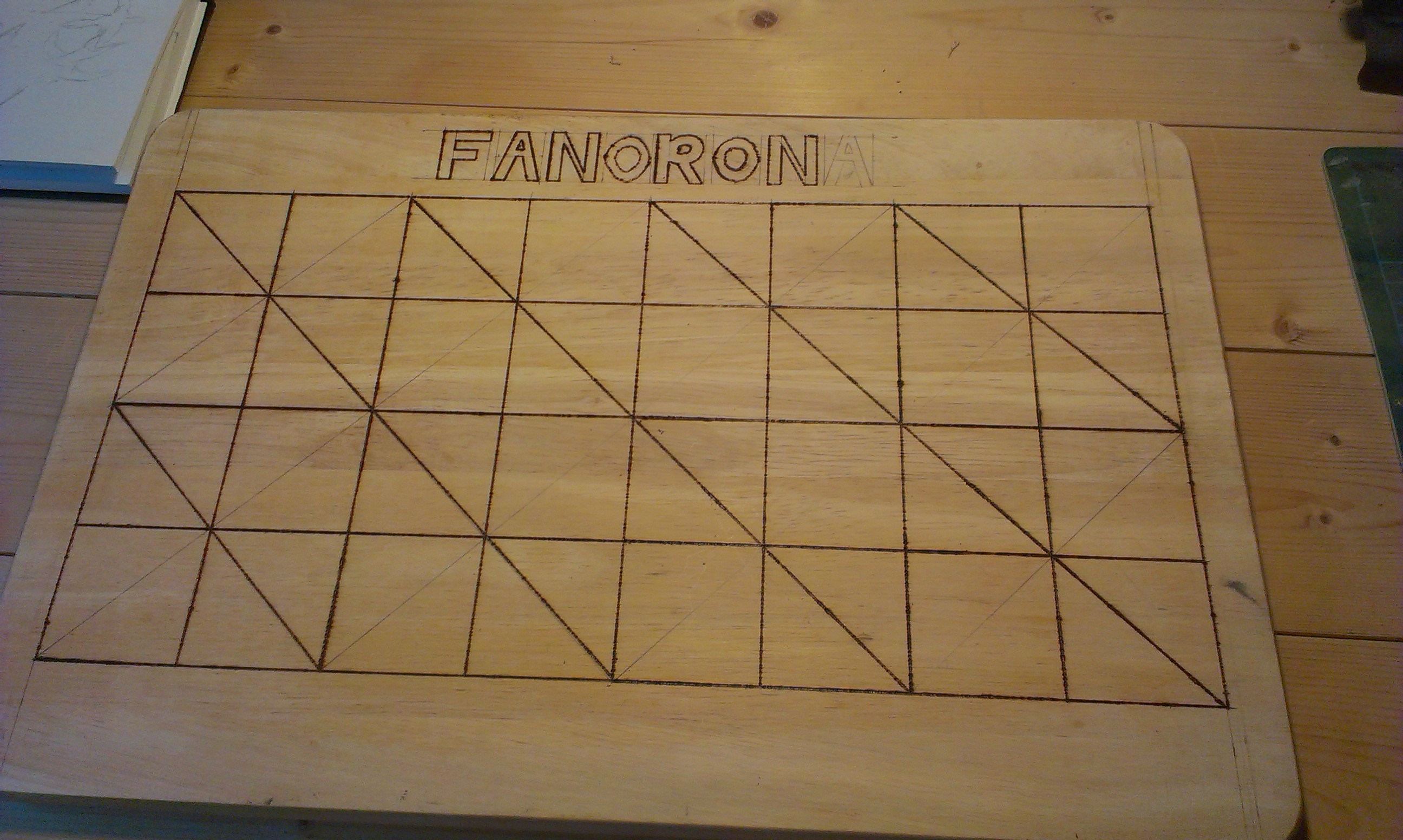
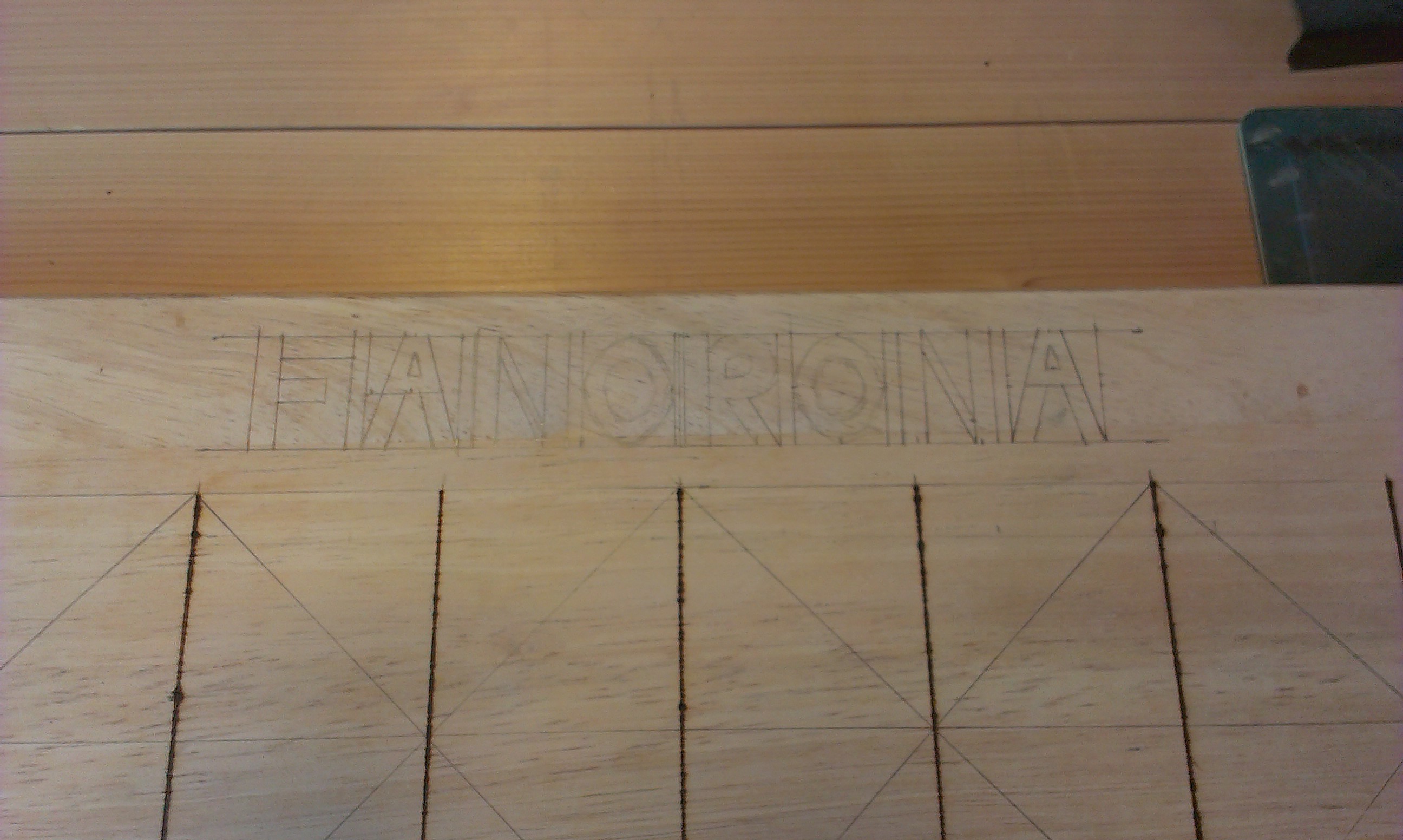
  1. To add the lettering you need to draw it out on the board first. To do this I found the middle point then used boxes of 2cm with 3mm gaps to space the lettering.
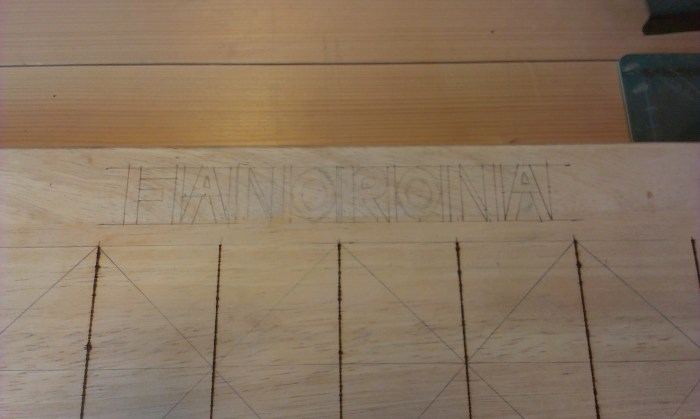
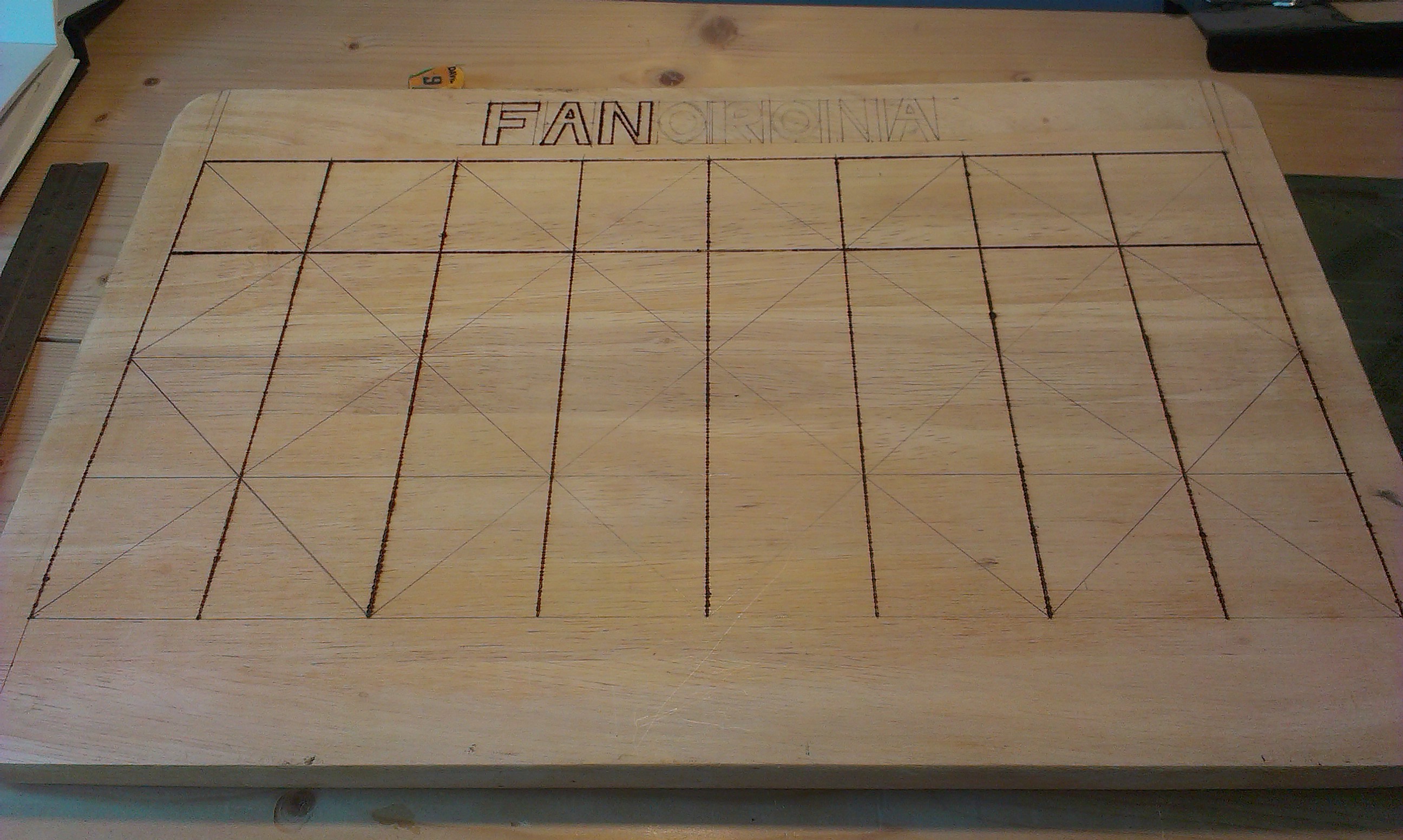
    The lettering drawn onto the board.
    The lettering drawn onto the board.
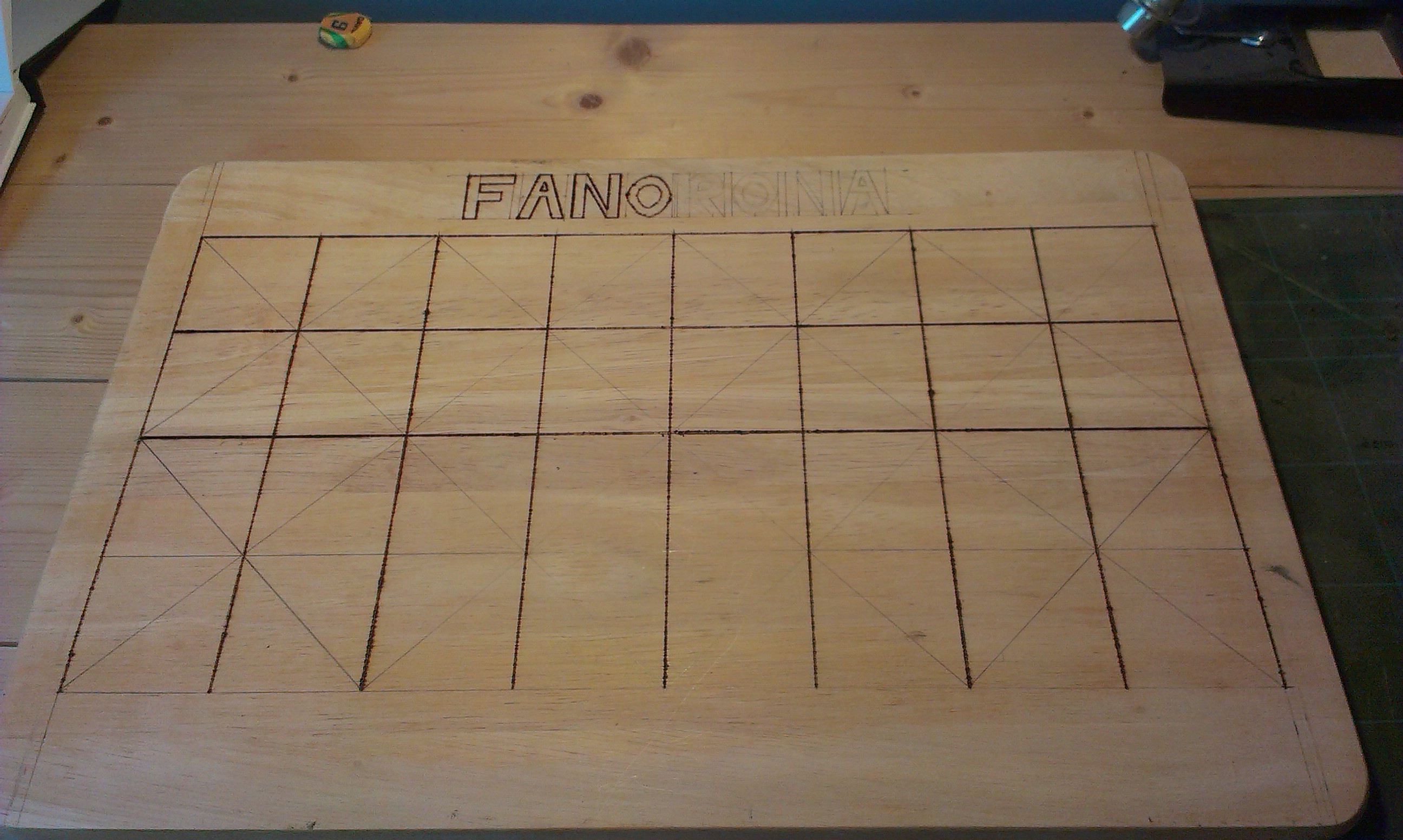
  2. Then brand it into the wood much like you did the lines accept you will have to do the Os free hand which is tricky and why they look worse than the rest.
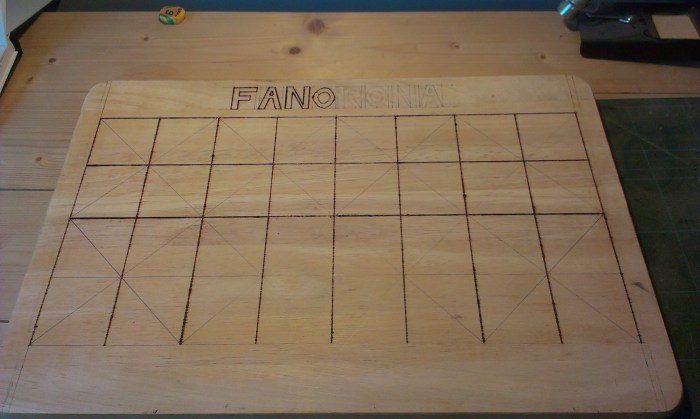
    Os look worse because you cannot use the ruler.
    O’s look worse because you cannot use the ruler.
  3. Once you’re sure you’re happy with it (which I’m not at the moment, I want to add lettering the other side of the board and possibly some other things which is why I haven’t varnished mine yet) you can varnish it. Make sure you have rubbed off any remaining pencil marks and anything else you don’t want left on there. Now there are many different varnishing techniques. For the best result I recommend spray on varnish of which you need to do at least 5 very thorough coats, and then leave to harden for around two weeks. Then lightly rub the board down with some fine grain sand paper and do a final coat or two.
Now you should have a finished Fanorona board and you’re ready to play with whatever pieces you’ve decided to use.
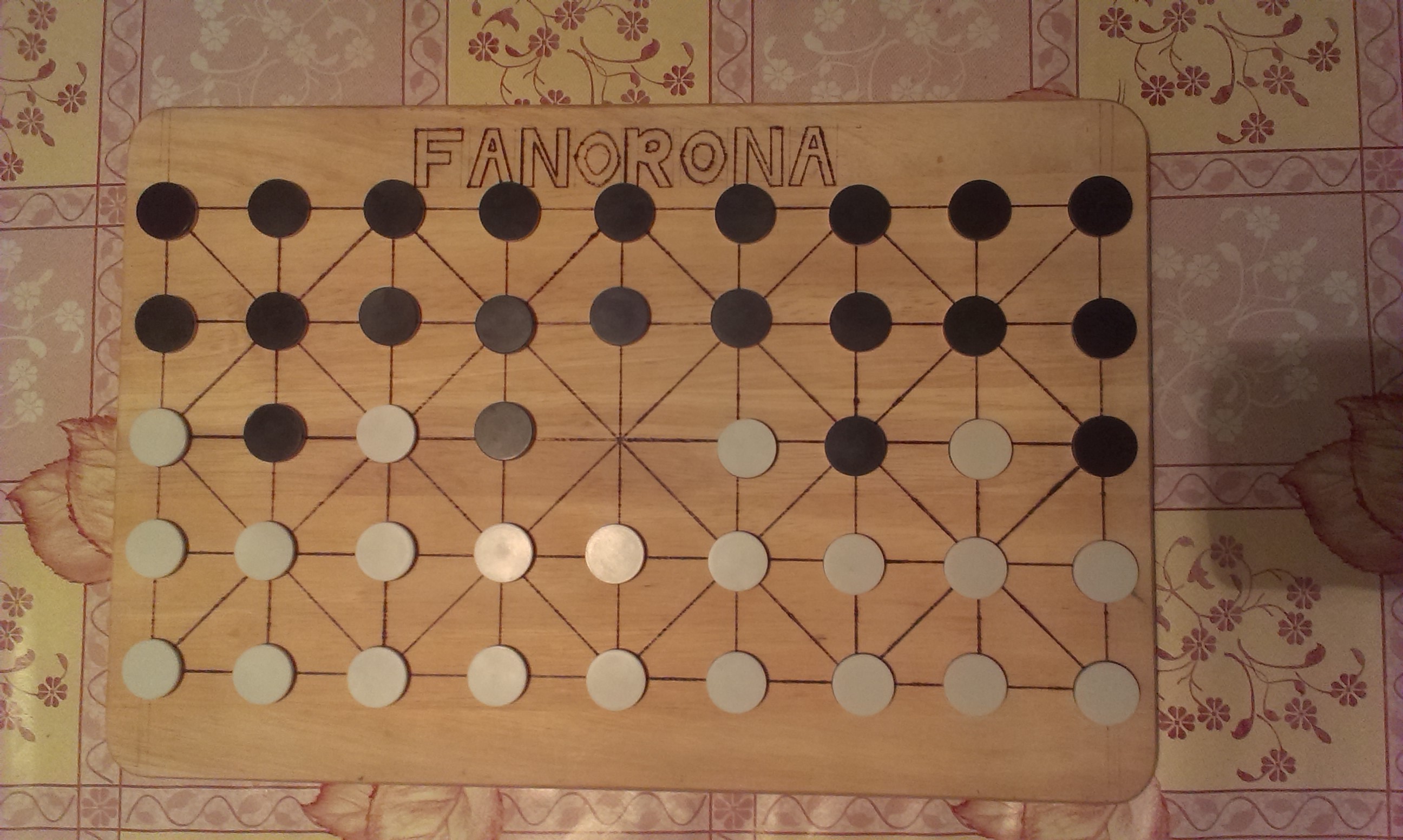
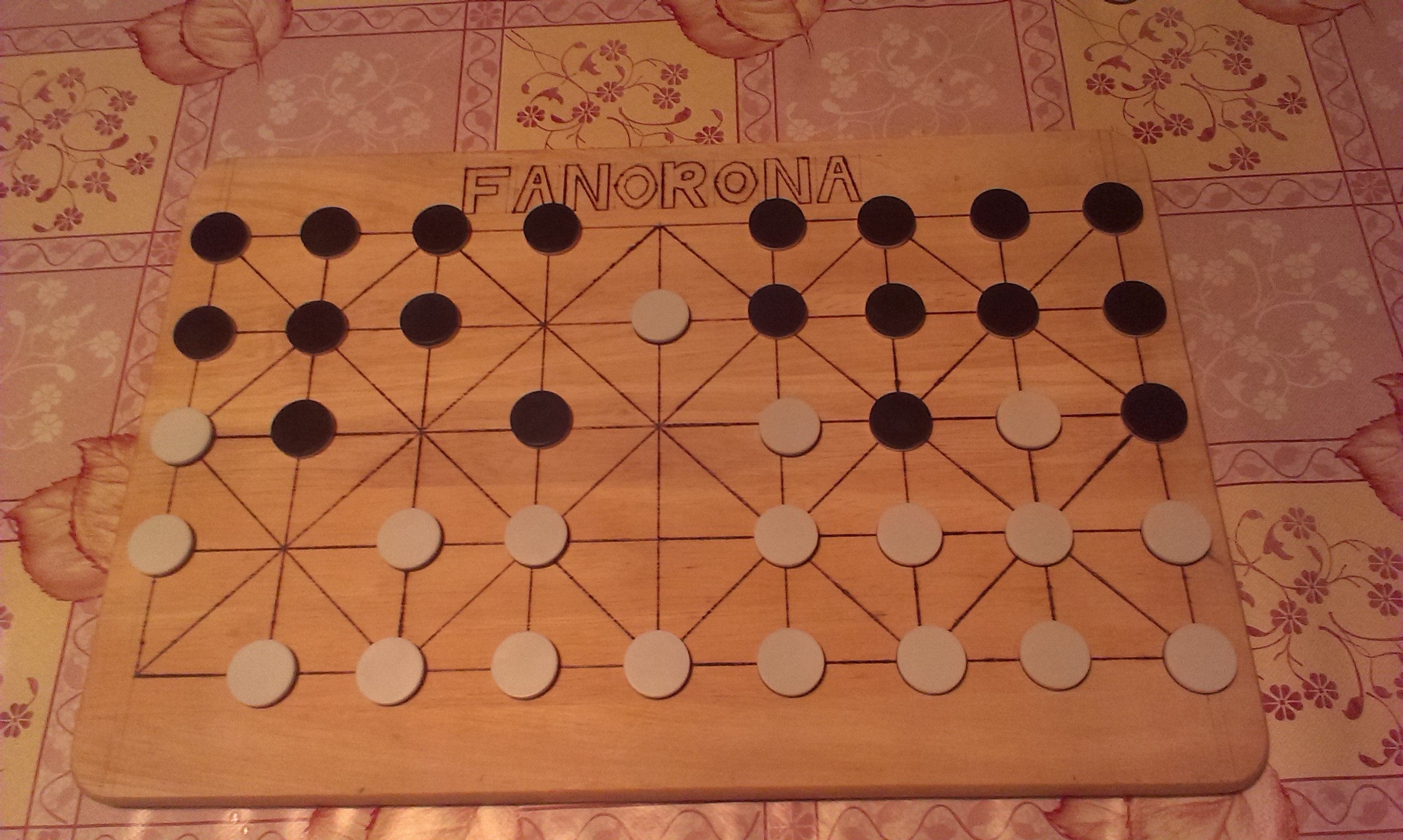
The starting set up of Fanorona on or home made board.

A Final Ramble:

After all this hopefully you’re super happy with the end product, if not you can always sand it all down and go again (I wouldn’t recommend this if you don’t own an electric sander). And remember, after all that you still have a blank side to your board (unless you were super smart and already made yours on the back of an existing games board) which you could put anything else on, I’m planning to fit a Twelve Men’s Morris and Three Men’s Morris board onto the space on the other side so keep your eyes open for a post on them.

This game was first brought to my attention along with the various Men’s Morris games through the PS3 game Assassins Creed III (yes, I play computer games too, we’re not completely stone age) I am ever thankful to Assassins Creed for trying to educate me through the medium of a computer game as well as being the most fun game that can’t be played on a board out there. However I find Fanorona in Assassins Creed III impossible to win at, I dunno if it’s because I’m just super bad at it or their programming behind it is to good but even on the easiest level I can’t win. Although I also can’t really beat my sister at it at the moment as she addresses in her post on the history and game play of Fanorona here.

Definitely a Quick One! – Fanorona! (pronounced Fa-noorn)

3 - 5

Number of Players: 2

Year of Publication: 1680

Creator(s): Again, the designer is unknown, but Néstor Romeral Andrés was the artist for the modern board

It gets to be big and bold and exclamation marked in this sub-heading because it’s the first game we’ve managed to cross off our list of Games We Want, which is a noteworthy achievement in the limited history of this blog. Fanorona is also notable as having been bought to the attention of many through the PS3 and Xbox 360 game Assassins Creed III where you can play it as a mini game within the game along with Nine, Six, Three and Twelve Mens Morris.

Fanorona is currently down as the quickest game I’ve ever played, and that’s not only because I’m terrible at it (but better than my brother at the moment). It’s for two players and played on a rectangular board.

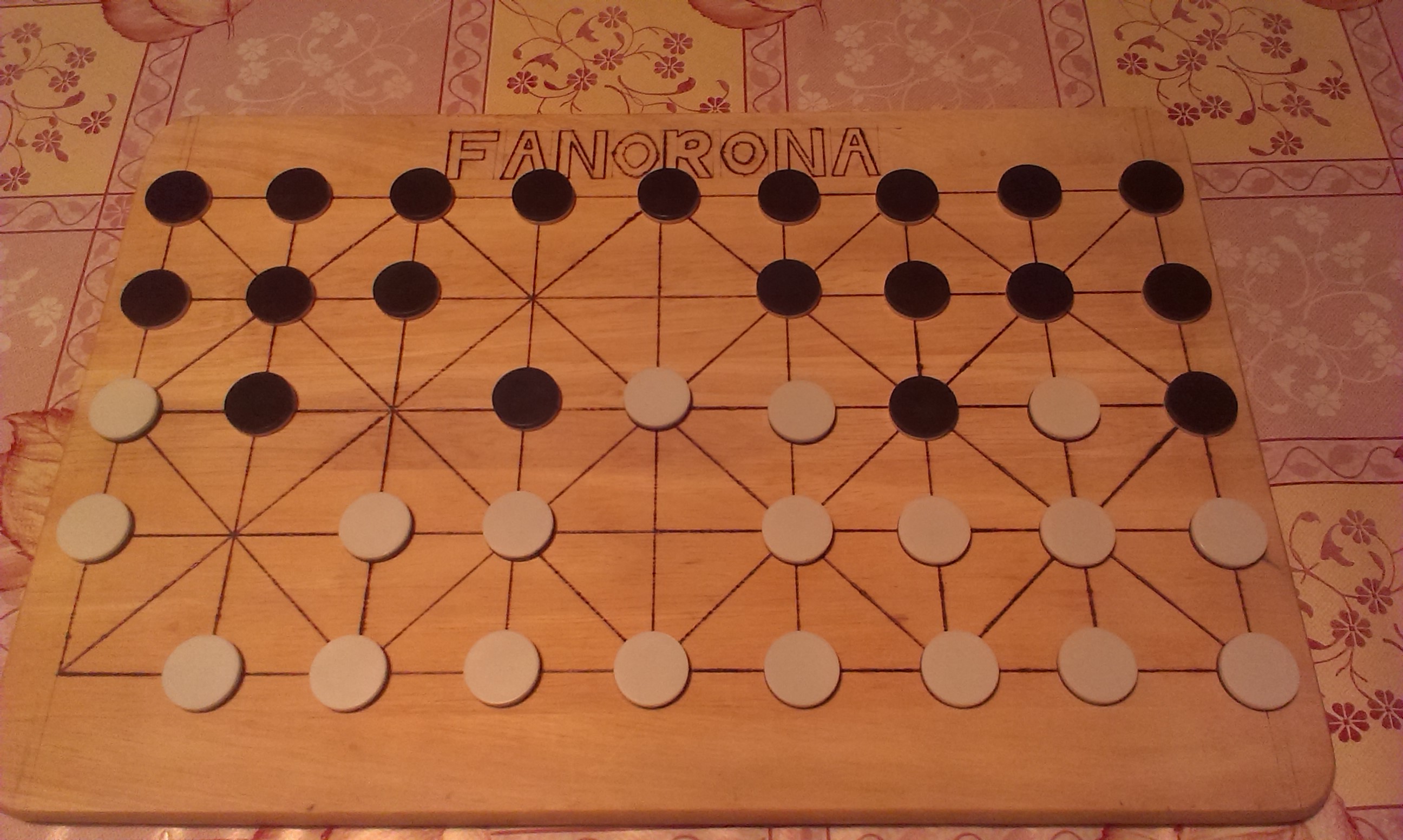
Our home made Fanorona board. Made on a chopping board using a soldering iron to brand.
Our home made Fanorona board. Made on a chopping board using a soldering iron to brand the markings into the wood.

History and Interesting Things: 

This is where I organize all the interesting stuff I found out about Fanorona, if you don’t want to read about the history of the game, skip down a bit and see more pictures of us playing and a bit about the rules and how to move!

10 Things I Found Most Intriguing:

  1. Fanorona is a strategy game, but, like Go, it’s considered a one-off. Not part of any other family of games.
  2. It is believed that it was developed from the game Alquerque, which is most commonly played in Arab countries and may date back more than 3,000 years.
  3. Fanorona comes in three varieties – Fanoron-Telo which appears to be identical to Three Mans Morris (another on the list of Games We Want) – Fanoron-Dimyand the board for which is identical to Alquerque – and Fanoron-Tsivy, more commonly known as Fanorona and the most well-known version of the game.
  4. It’s the national game of Madagascar and is so important there that they have a National Committee for the Coordination of Fanorona and an International Fanorona Society.
  5. The only recurrent story I can find involving Fanorona is the following about a King called Ralombo. He was sick and trying to decide what would happen to his Kingdom when he died, he did not want to divide the Kingdom between his two sons, so he sent for both of them. He reasoned that the son who arrived first was the most loyal to him and should therefore inherit the Kingdom. His oldest son was engaged in a game of Fanorona when the messenger came and was in a situation called telo noho dimy, a very difficult situation involving three pieces against eight. He was so absorbed in the game that he sent the Kings messenger away. He did not arrive at the castle until the following day, by which time his younger brother had already inherited the throne.
  6. I reach point six and find that, given the limited history that is known about Fanorona, I have nothing left to write, so pretend that this is ten points, and keep reading to find out about the rules and game play!!

Game Play:

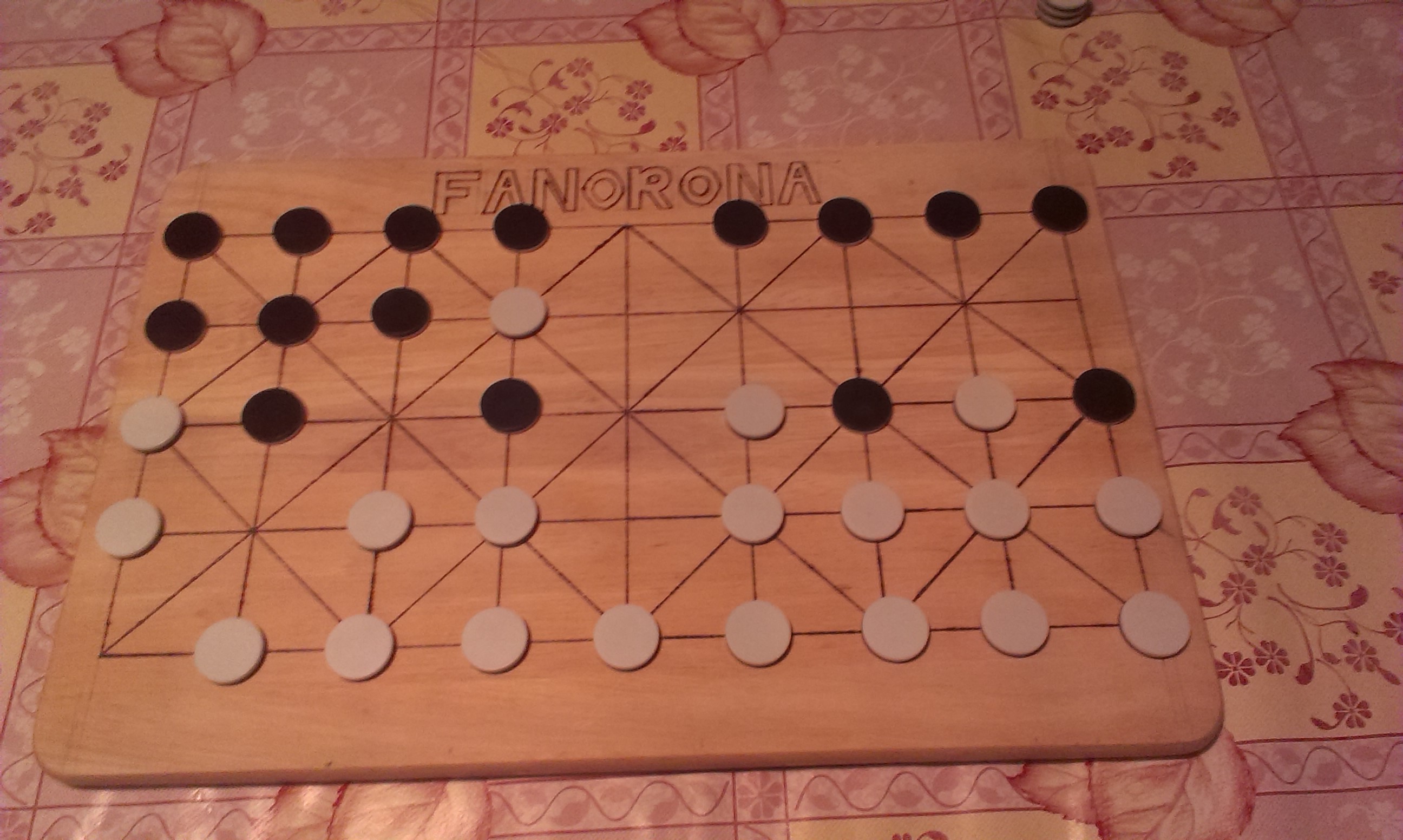
Black and white playing pieces are used for this game, they are set up as shown in the picture below. There is one space left empty in the middle of the board, which allows white to make its first move. These pieces  we stole from a copy of Reversi (more commonly know as Othello) to go with our home made board.

The starting set up of Fanorona on or home made board.
The starting set up of Fanorona on our home made board using Othello pieces.

Anyone who’s familiar with Draughts will understand when I say that the game progresses quickly due to the compulsory taking rule. Also like Draughts, taking moves can be linked. A player can continue to take pieces with the piece they initially moved that turn for as long as there are legal moves available. The nature of the game is sacrificial, for the game to progress each player must lose a large number of their pieces.

To take a piece in Fanorona a player must move one of their pieces either towards or away from the piece(s) they wish to take on a horizontal, vertical or diagonal line. The player then removes the pieces they have taken on that line up to the point where there is a gap between pieces.

The starting position of a taking move.


The white piece then moves forward to take the black piece in front of it
The white piece then moves forward to take the black piece in front of it.
It then moves to the left to take the line it moves away from and that is the end of its move chain.

Initially the game should progress very quickly, with each player taking multiple pieces each turn. When the board begins to empty, the rate of game play should slow as each player will have more options to choose from and cannot afford to be reckless with their remaining pieces.

The remaining pieces on the board after only a few minutes of play.

The objective of the game is to either eliminate your opponents pieces from the board or force them into a situation where they cannot move.  If either of these situations arises you win the game. If you reach a point where neither player can move or take another players piece the game comes to a draw.

Once you’ve played maybe, twice, the game becomes easy and can be played in well under 20 minutes. After grasping the initial rules about moving and taking it is then only strategy that remains to be developed by anyone wishing to play regularly.

The game close to the end as black finds itself backed into a corner.
White is the winner having removed all of the black pieces from the board.

There will be another Fanarona post going up in the next few days where my brother shows you how he made the board and how you can make your own if you like. Considering that buying copies of this game appears to be rather expensive.

For anyone interested, I read about the history of the game here.

Quick games! Well, relatively – Backgammon

5 - 5

Number of Players: 2

Year of Publication: -3000

Creator(s): Mostly unknown, but Willem Cornelisz Duyster is responsible for the design of the modern board

This is the first in a series of posts, it was initially going to just be one, but I realized that I have far too much to say about each game to make it fair on anyone reading it to put it all together. So this post is just about Backgammon, enjoy.

The games I’m about to talk about in these posts probably don’t count as all that obscure, the names being fairly well-known as far as I’m aware. However, they are games that have fallen out of common play. Which seems like a real shame to us.

IMAG0992

Recently we’ve learnt how to play Backgammon, and we think it’s a great game. Once you’ve played it a few times it’s very easy to remember the rules and to develop your strategies and it can be played in half an hour or so, making it one of the quickest board games I’ve ever come across!

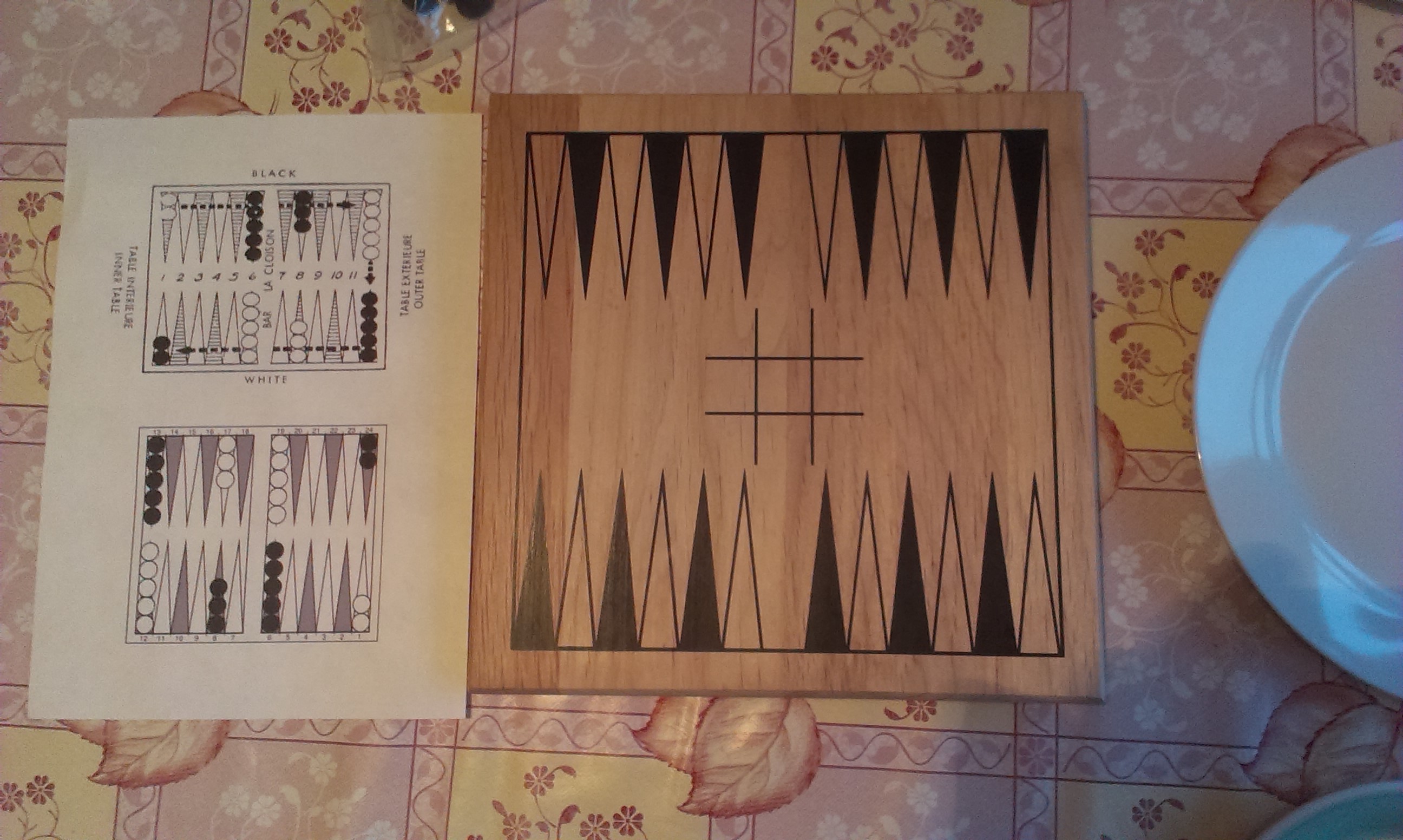
We still require pictures to set up, hence the printout.

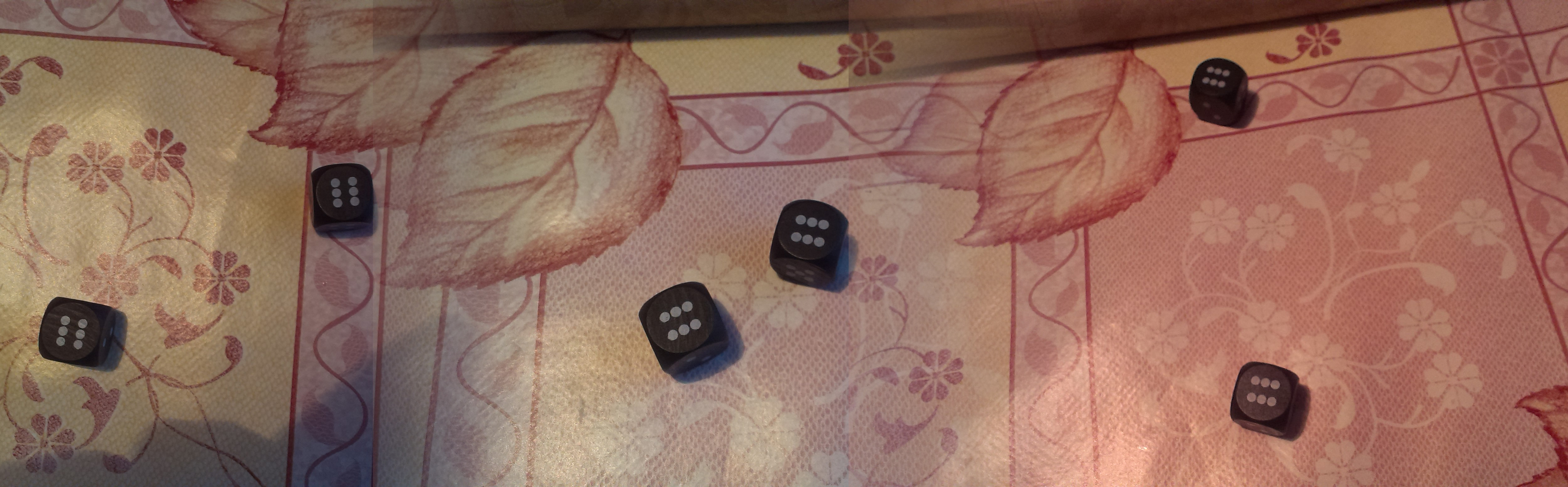
We had a few teething troubles with this game as the copy of the game we own didn’t come with rules. So we went on a quest to Google and learnt the rules off the internet. The only problem with that was that, aside from the two dice each player roles to determine their move, there is a fifth die involved in Backgammon called the doubling die, and the internet rules didn’t explain what this was for.

IMAG1080

Oxfam to the rescue!
I work a few days a week in an Oxfam charity shop, and on my break I went through the board games we had in the storeroom and found a copy of Backgammon to read the rules from. Initially this copy of the rules only told me a little about the doubling die, but was enough to solve our problem temporarily. I learnt that it wasn’t originally part of the game and has been introduced in the last century or so.

I thought this interesting so I’ve been doing some research into the history of the game. General consensus is that the game may be well over 5,000 years old, along with Chess and a game called Go, which we have yet to play, and is likely to have originated from Iraq, which was Mesopotamia at the time.

There are literature and artistic references to Backgammon (although not under that name) all over the world throughout all the ages. Chaucer references it in The Canterbury Tales as Shakespeare does in Love’s Labour’s Lost. It has always been a gambling game – Emperor Nero played for roughly the equivalent of $10,000 per game! – But there was only one stake made in the game, one amount was agreed at the beginning and it is that amount that the winner claimed at the end.

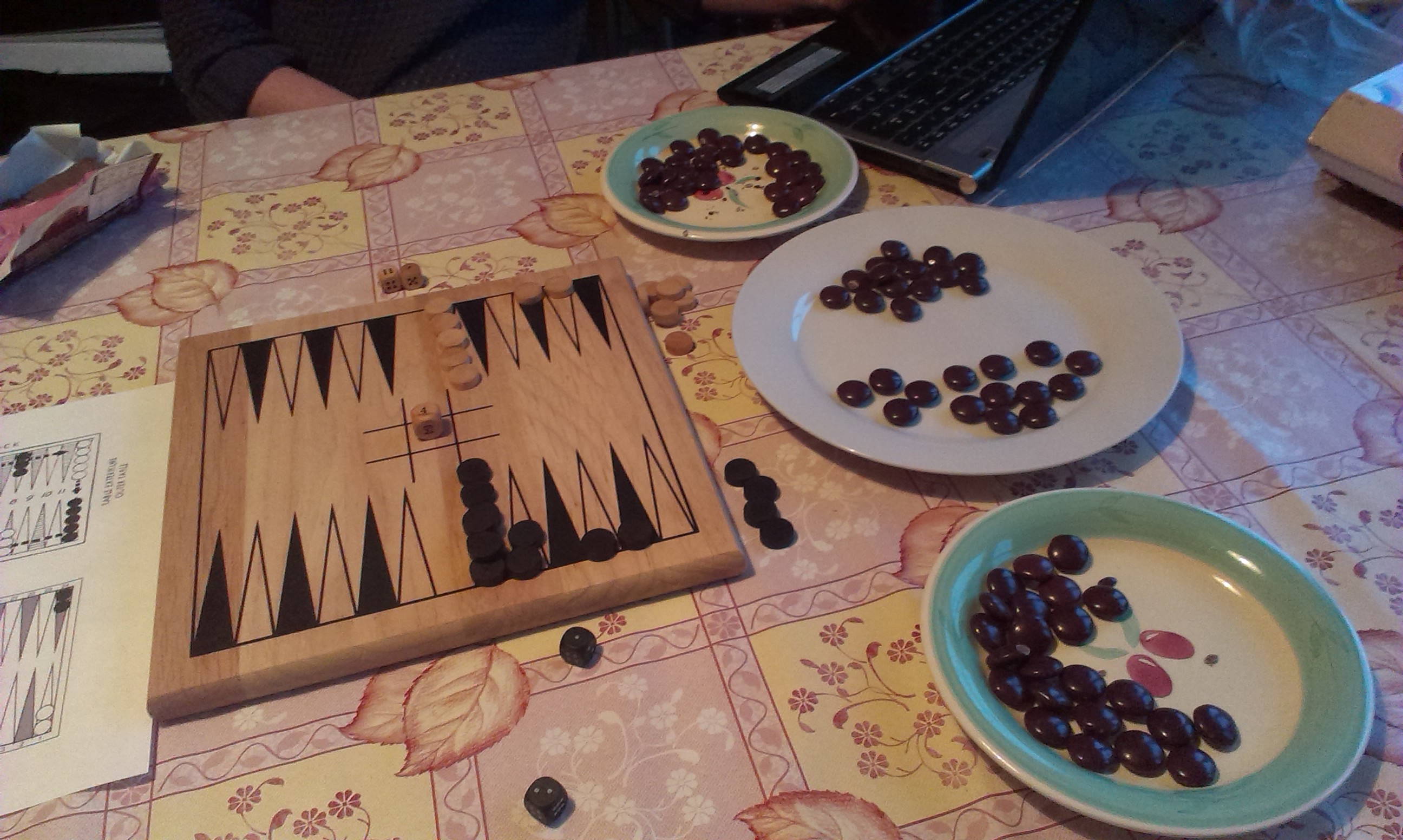
However, as you’ll see in the pictures below, due to a lack of expendable money in our lives we gamble with chocolate instead, you pay less for more “chips”, and you can eat them when you’re finished!

Our horrific gambling tendencies.

In 1920’s America Backgammon was going out of fashion, it was too hard to bet on and took too long to play without anything exciting happening for the players. It’s at this point in history that the doubling die first appears, this element gave the game the extra boost it needed to become a popular casino game again.

Interestingly, although it is fairly easy to track the history of Backgammon in America through strategy books that were written about it, it is nigh impossible to know when it crossed the Atlantic and came to the UK.

YOU GAVE ME LOADED DICE!

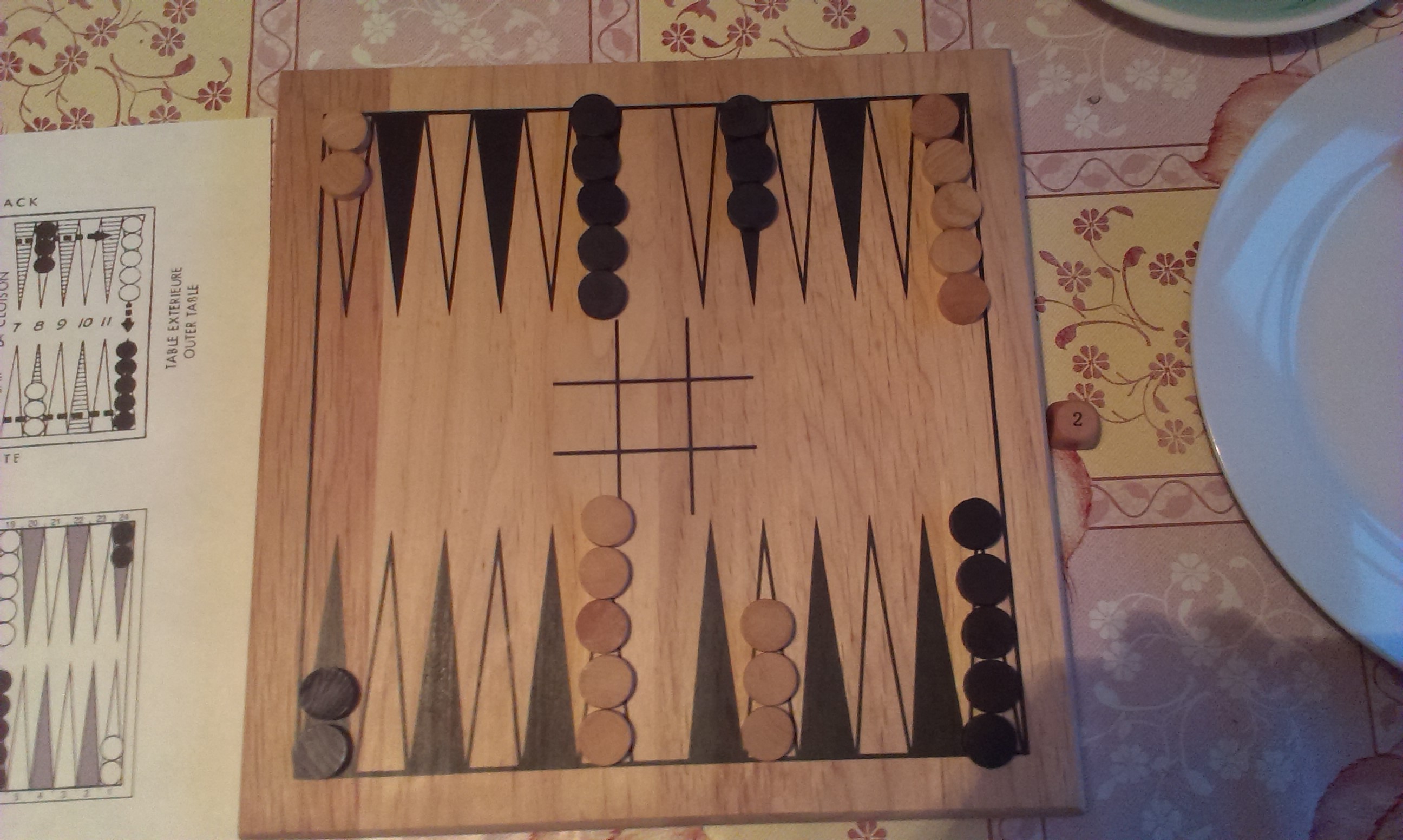
I also learnt that Backgammon can be played with the offloading space either to the players left or their right – there is no fixed direction of play. This gave a new dimension to the game as it can give a player an advantage to be able to play the game either way around. It will also prevent confusion for them in the event that they ever have to play the game in the opposite direction to the one they are used to. For this reason we’ve started playing half and half, setting the board up differently for half the time.

If anyone’s interested my next post in this chain will be about the game Fanorona, not to confuse you but there’ll be two posts about it, one from me about game play and history, and one from my brother about how he made his own board. His is likely to be much more interesting!

Load off left!
Load off left!
Load off right!
Load off right!

And if anyone’s at all curious, I found most of the things about the history of Backgammon written here on this page.

Also if anyone wants to learn the rules of Backgammon we recommend looking here or if you’d rather learn to play by doing we recommend playing here (click ‘Play as Guest’) and use the tutorial.

Breach the Keep – Under development!

Now… The totally unexpected and unanticipated game! That thing that no one has been waiting for! A look at the obscurest game of all…

Breach the Keep! 

Also widely known as that game I just made up that’s actually quite good, or so I think!

The Idea:

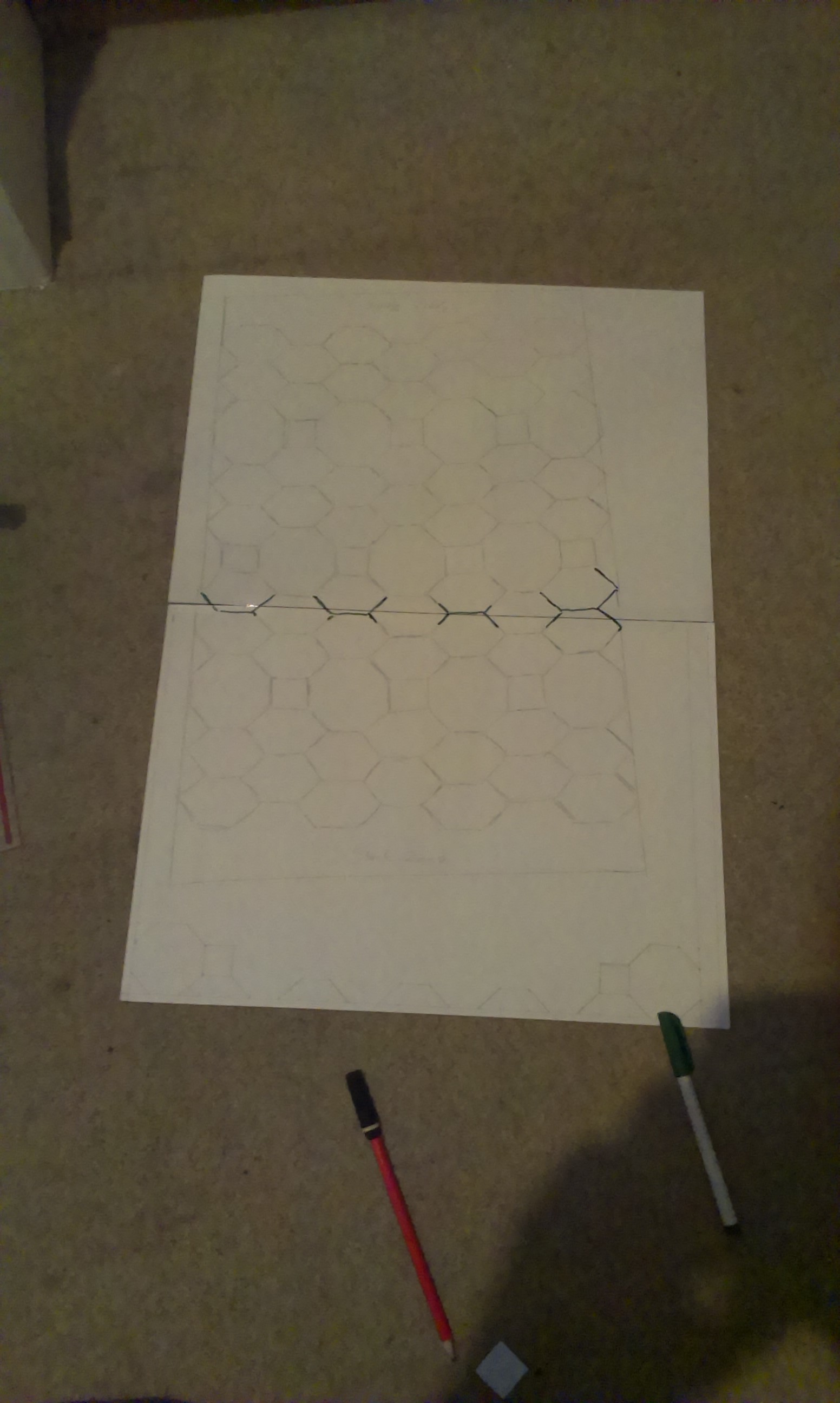
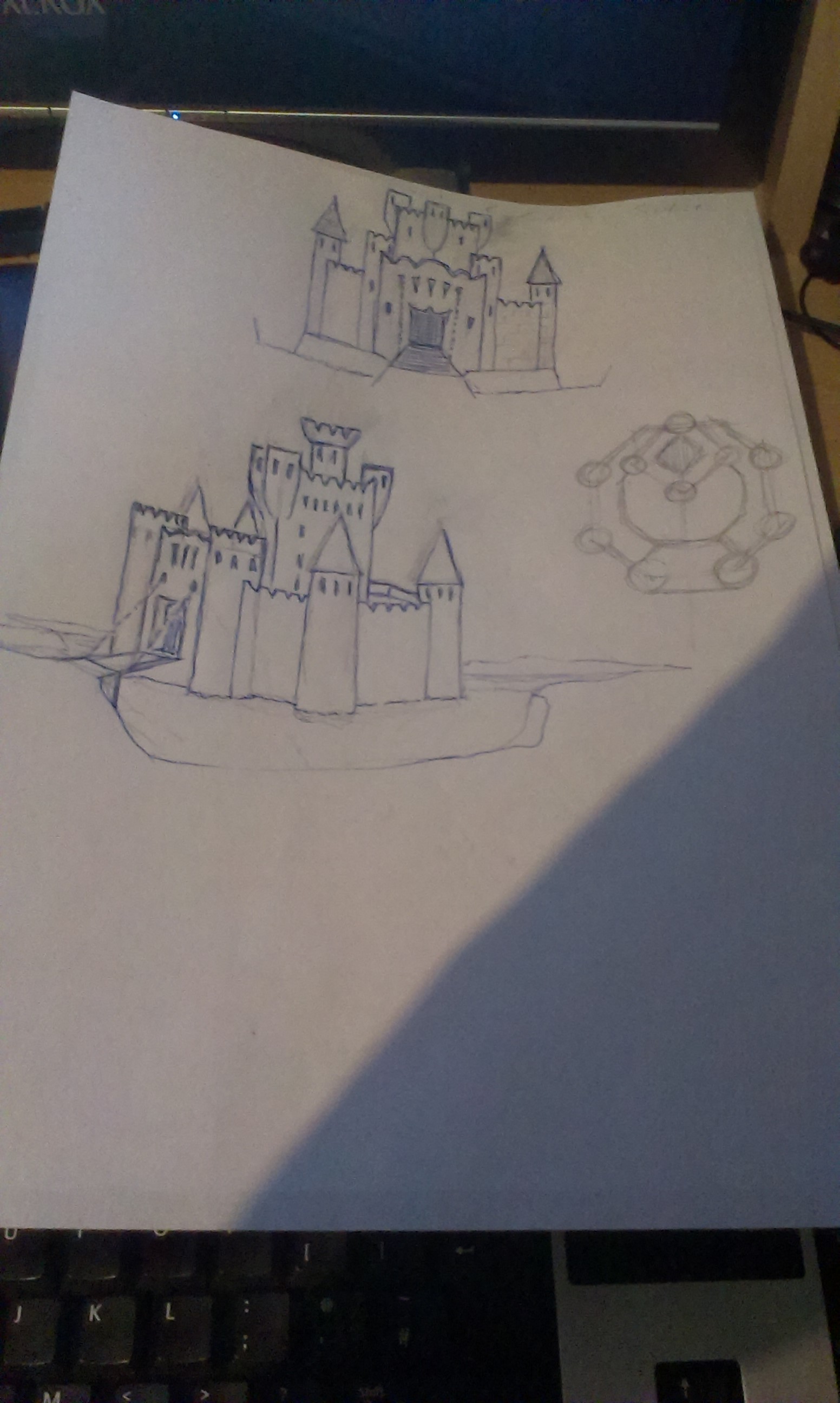
So one day I’m sitting there and I’m like “I should develop a board game” so I go and create a terribly complicated game about super heroes… Then a year later I come up with Breach the Keep after saying to my sister “we should develop our own board game!”. The initial idea was for the board, I thought it would be good to have a basic strategy game that did’t move in squares, so I came up with the idea of intersecting Octagons, Hexagons and Squares and drew this:

IMAG0970
My super wonky first prototype of the board!

What I was going to use it for exactly hadn’t yet come to me, all I thought was that the octagons and squares had to mean something different to the hexagons. So (naturally) I started thinking about war… Most strategy games seem to be based in some form or other on the idea of war. I started thinking about medieval war and how you had to advance step by step, taking your enemies castles and burning their villages (yeah not pretty but it was war). So I thought, what if the octagons where castles and you had to make your way down the board taking them as you go and holding them against your enemy and thus the initial idea was born.

Development:

Next I had to establish rules to the game, I had to work out how it should work and decide upon an objective. First I thought what if you just had to take all the other pieces? But then that seemed stupid, they (I have no idea who) always say the mark of a bad chess player is one who has to take all their opponents pieces before they can put them in check mate. So I thought what if, like chess, you had to capture their king? Then he could be in your Home Keep that, if breached, meant you lost. This seemed like a good idea so I went with it. We then had to test play (a LOT) to figure out how movement would work and how taking and breaching would work.

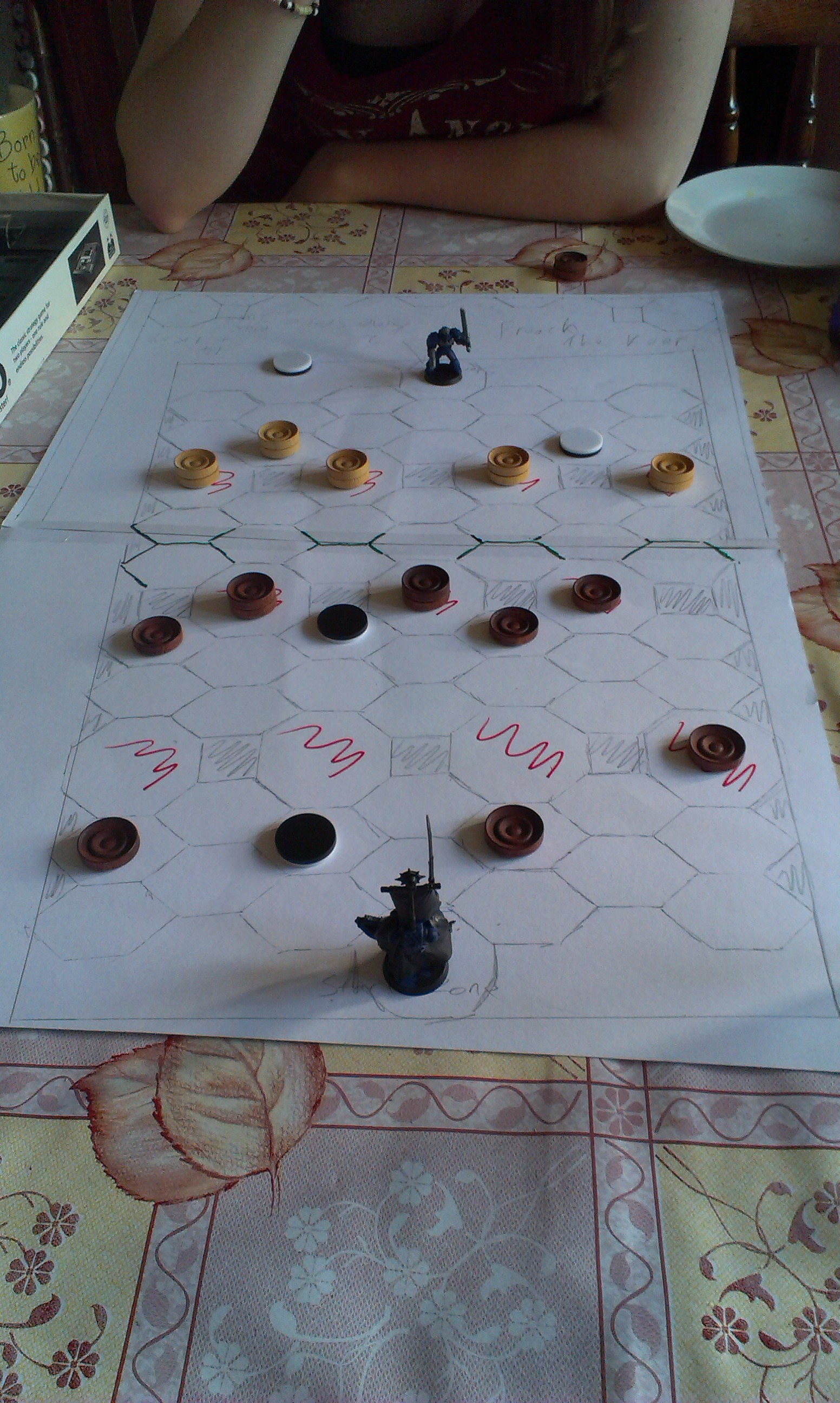
Yes those are Warhammer pieces, Draughts pieces and a few Othello pieces.

So test play ensued, using pieces borrowed from other games to try to figure out how many pieces were good, how much they could move, how they could move etc. This was a long and depressing process of trying out almost everything we could think of and debating if certain things worked or not. I won’t go in to detail here or you’ll get bored and if you’re still reading at this point you’re probably already bored enough. So in super short detail we came up with some great ideas for combining pieces so they could move further to make them more powerful and so great ideas to balance the breaching of a keep against the defense of it. We also decided that the board was too small so I created this one:

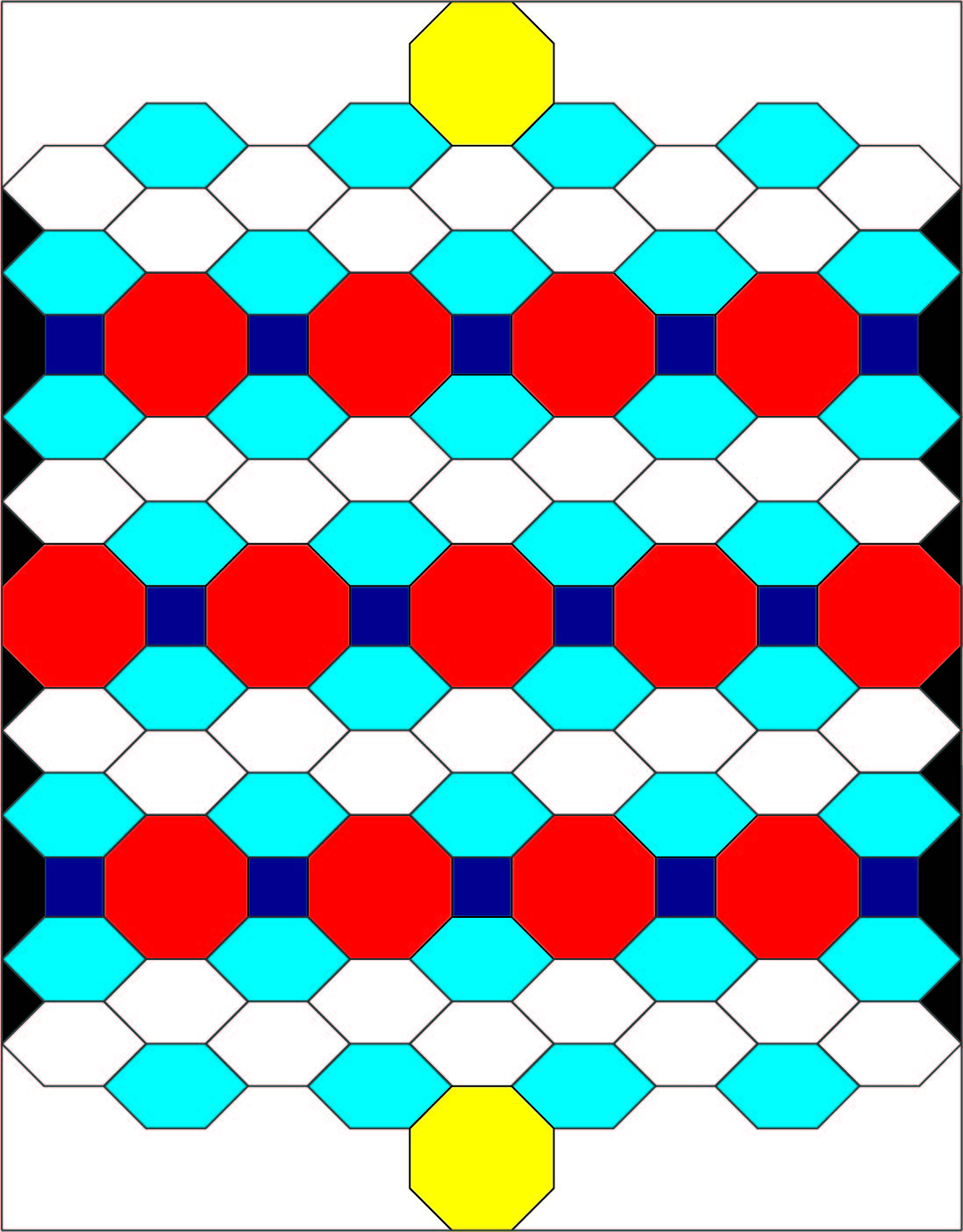
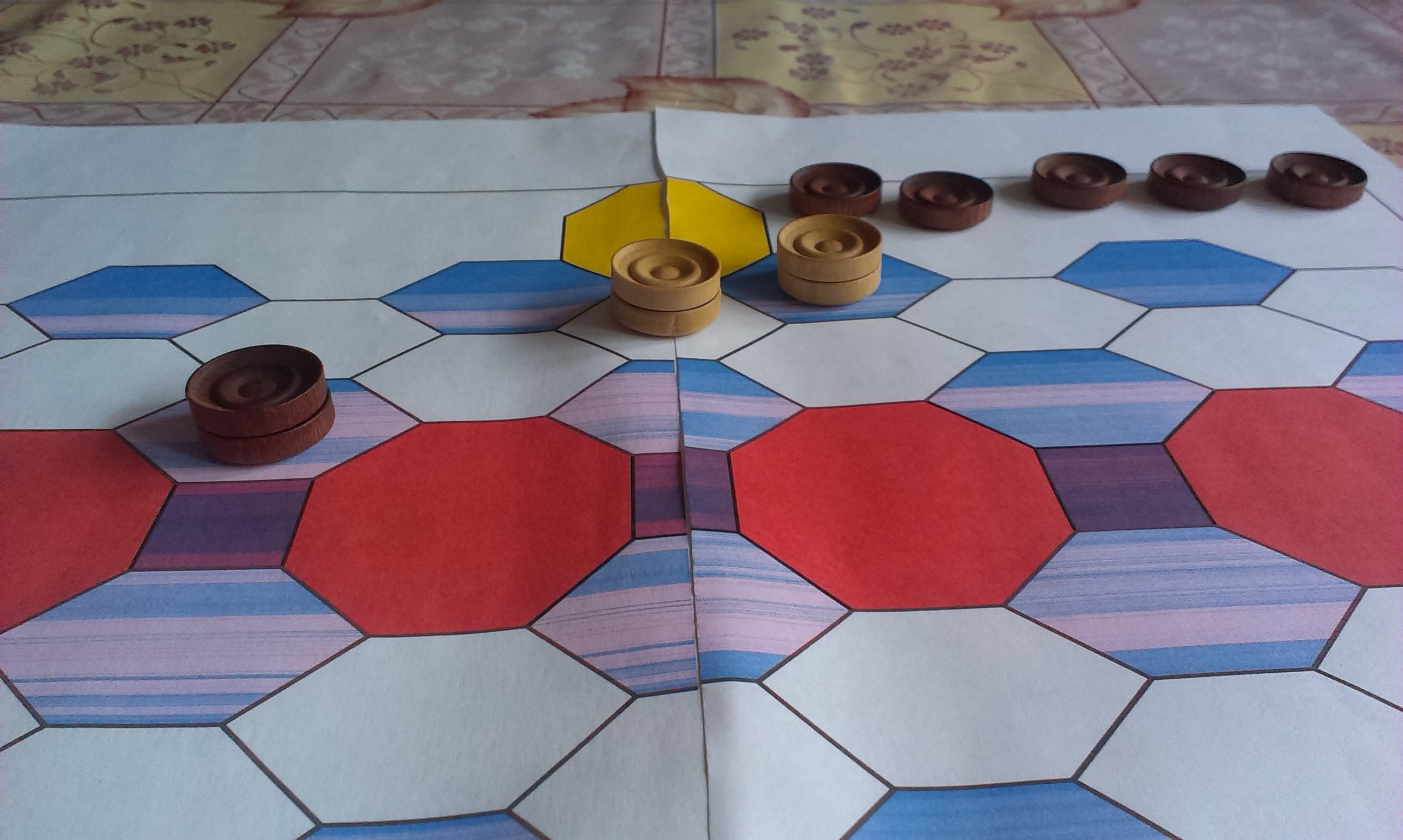
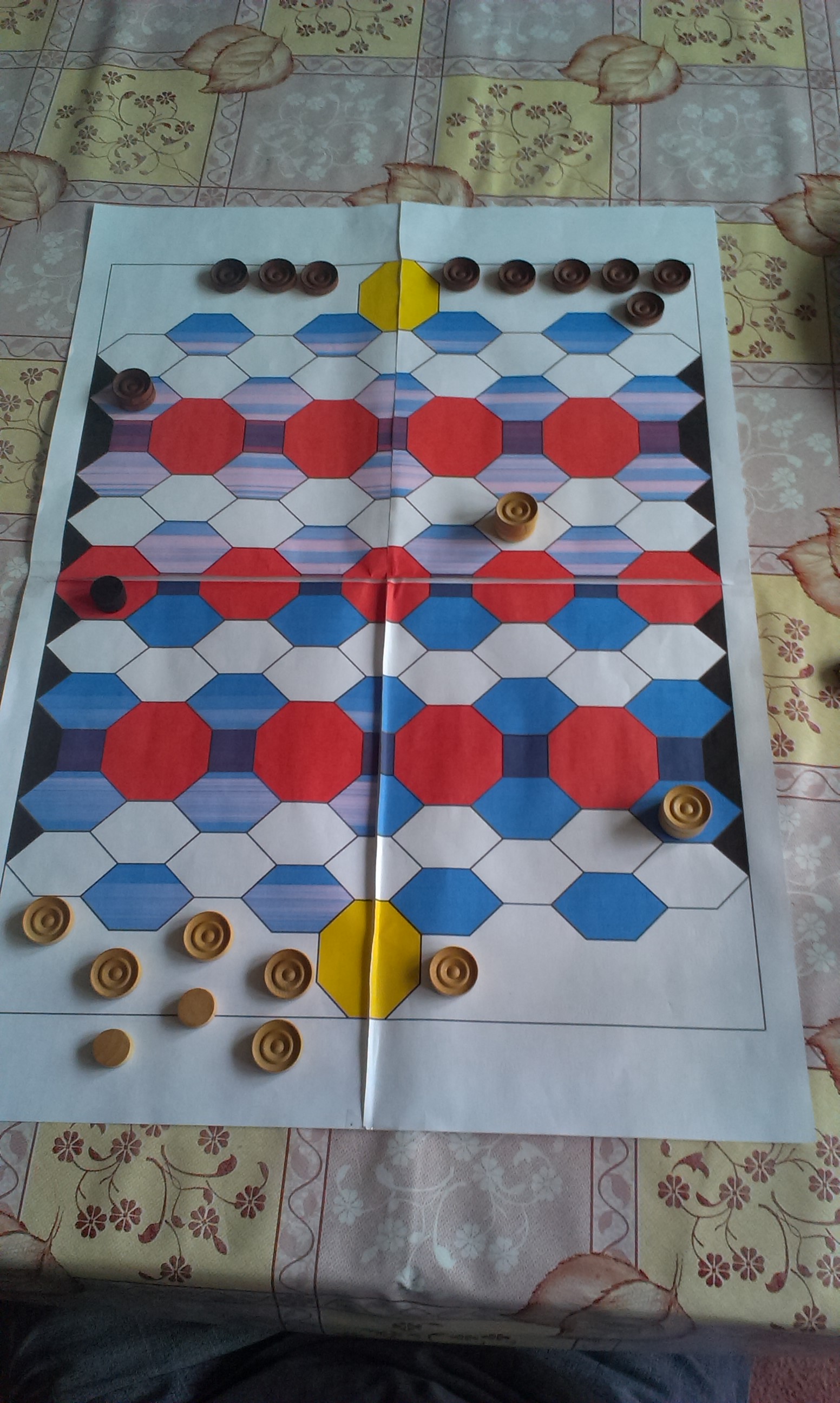
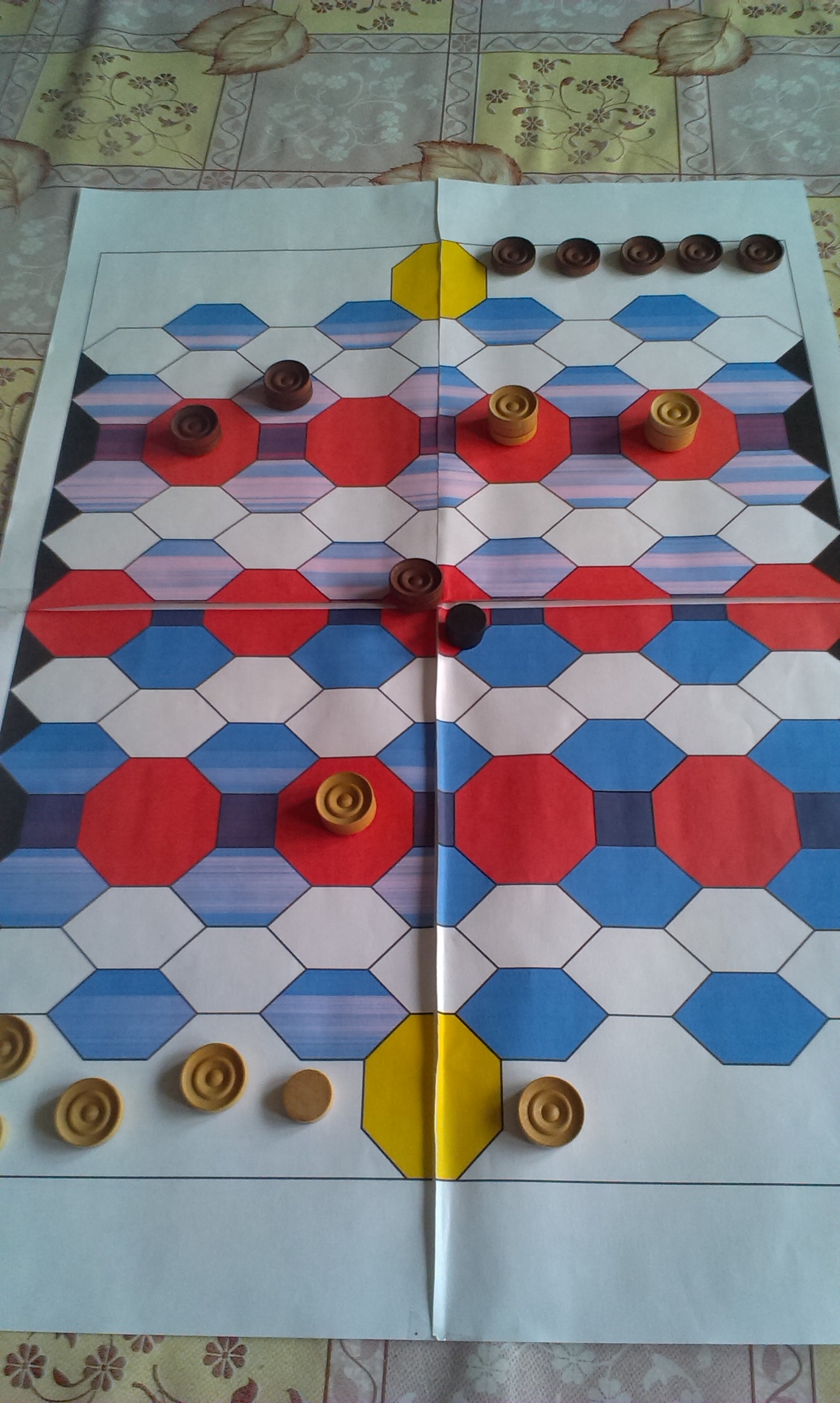
The basic concept of the board - It will be much prettier once it is done!
The basic concept of the board – It will be much prettier once it is done!

Which is still underdevelopment in a aesthetic sense but after much more trial playing we were rather happy with:

IMAG1039 IMAG1028  IMAG1033 IMAG1031

So i started thinking what to do with it next. Obviously I wanted a real copy of it rather than something printed on A4 paper taped together and stealing other board game pieces to play. Additionally I needed it to be tested by a wider audience so I thought “why not start a blog and offer up ten free copies once you’re ready in exchange for feedback to see if it’s actually a terrible game and you’re just blinded by your own delusions!” and so here we are. However the game is still under development, the board is being made to look pretty, I’m busy creating box art and pop out pieces that can be used with the game when its distributed. Additionally we’re trying to make the rules as understandable as possible (I often complain about ambiguity in other rules so I’m trying to make these as good as possible, unfortunately, and as you might be able to tell, writing’s not exactly my forte).

Concept designs for the box cover and for the Octagons (keeps) on the board.
A very basic and rough digital concept of the box art.

And Now Let’s Briefly Ramble:

So hopefully the game will be ready in around one – two months and will be shipped to the first ten people who send their address to the given email free of any charge on the condition you give feedback and tell me what can be made better and what you would have done differently. Now you’re thinking “Damn it now I have to keep checking this thing before I can get free stuff… But I want free stuff NOW!”. Well tough! Patience is a virtue, well actually Aristotle wrote about Temperance rather than patience but it could be understood as the same thing… Anyway this is a board game blog not a philosophy blog… Although I should start one of those too because philosophy is the birth of all knowledge and knowledge is POWER!

First post, Obscurity, Sneak Peeks and Java

So! First post! If you’re reading this WELL DONE! If not… I don’t blame you.

First post and Obscurity!

The aim of this blog is just to talk about games; mostly obscure ones if we possibly can… Let’s be honest not many people want to talk about Monopoly. The other aim is to show our ideas and designs for games and give some away for FREE, so you can test them and give us your feedback. We have one in the works right now so keep an eye on this space as the first ten people to email us with their addresses will get a properly produced copy sent to them completely free of charge – providing they promise to give us feedback!
Even if it’s just to tell us we’re terrible and should just leave.

Sneak Peeks:

Here’s the tiniest sneak peek of the game under development:

Yes those are Warhammer pieces, Draughts pieces and a few Othello pieces.
The basic concept of the board - It will be much prettier once it is done!
The basic concept of the board – It will be much prettier once it is done!

Java:

4.5 - 5

Number of Players: 2-4

Year of Publication: 2000

Creator(s): Michael KieslingWolfgang Kramer (Designers) and Franz Vohwinkel (Artist)

So the first on our list of Obscure games is an awesome game called Java.

IMAG0989

As far as we can figure from searching for it online it’s pretty hard to come by, lucky for us we picked it up in a charity shop for £3.99 on a whim. It’d never been used before as none of the pieces had been pushed out of their holders. Only downside we could find was a dent in the box but at £3.99 we’re not complaining…. Much.

IMAG0978

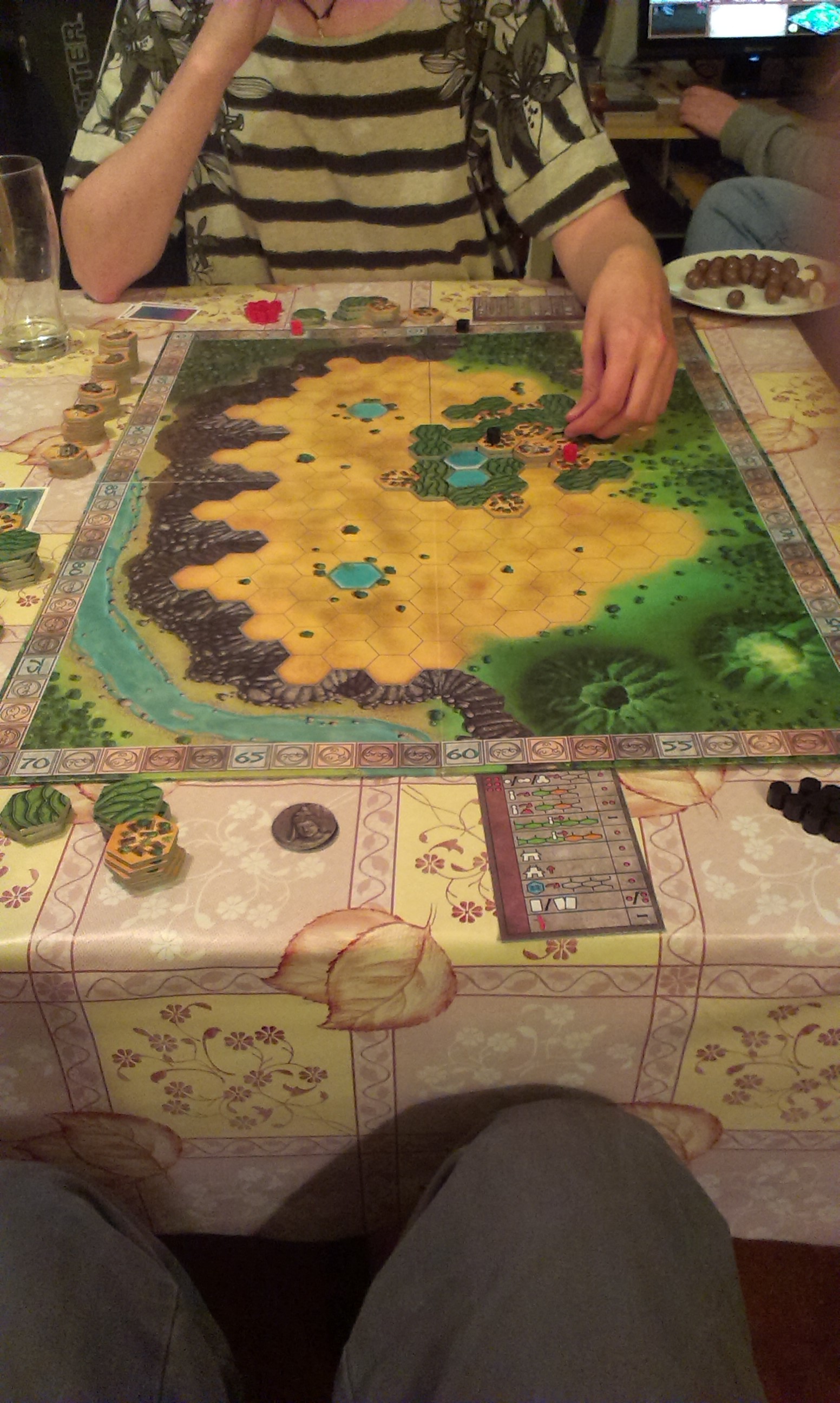
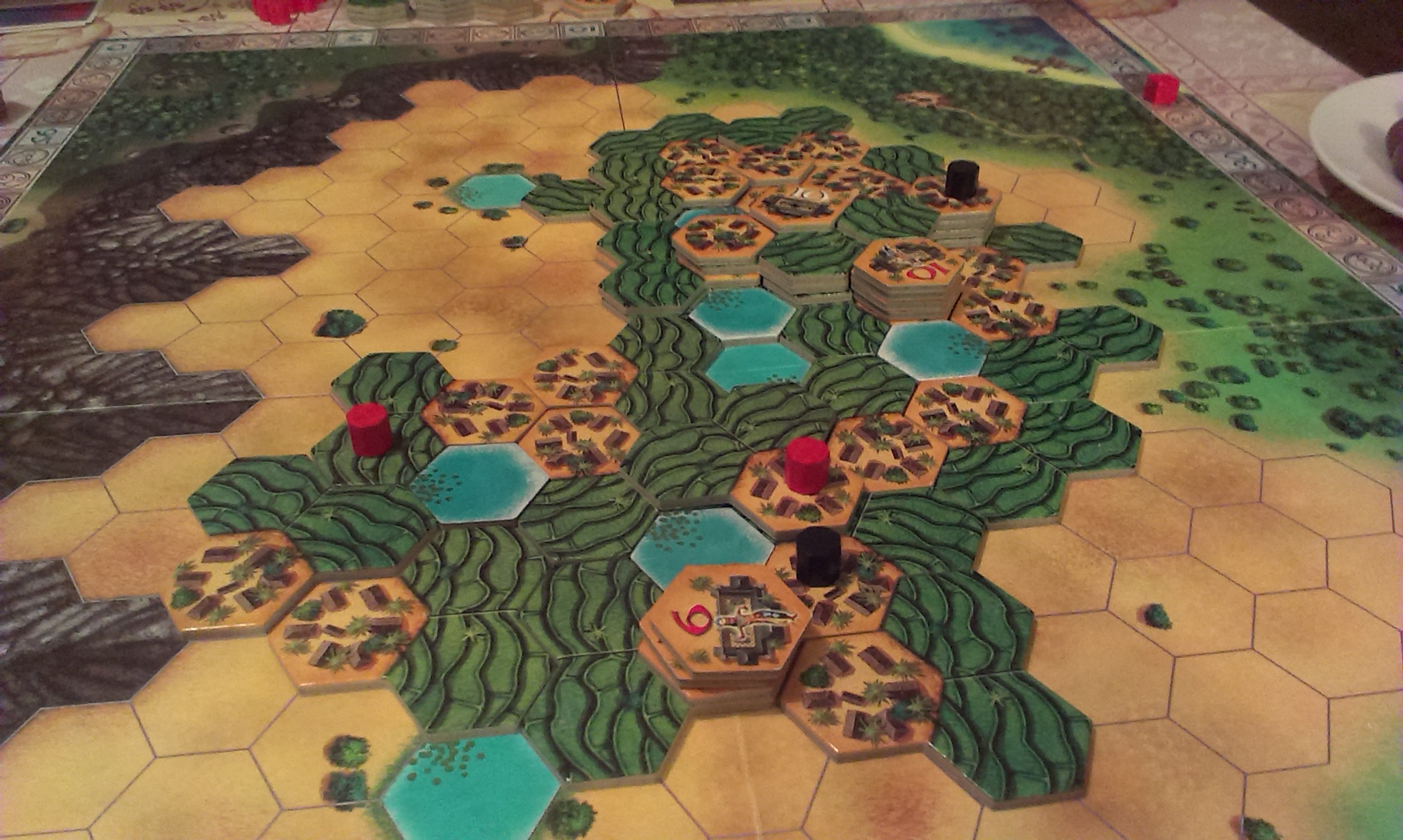
The game in essence can be seen as a strategic planning game. Your aim is to take control of the island of Java through building cities and enlarging them by placing more land pieces strategically. To win you have to score more fame points than your opponent, you accumulate these through building palaces and enlarging them and through palaces festivals or irrigating. From this run down of the game it sounds kind of boring and probably doesn’t make all that much sense… In fact when we were reading the rules we were thinking… Wow this could really suck. However it has a sort of charm to it that is unexpected and you quickly find yourself starting to try to out think your opponent. It also helps that you’re allowed (and encouraged to in the rules) to make the board more three dimensional by stacking pieces on top of each other, this is a visual bonus as the board ends up looking pretty cool!

IMAG0980

Now, as this is the very first post I’m not going to go on too much as I don’t want to bore you to death. If you have the opportunity to get hold of a copy of Java, go for it! It’s entertaining and tactical, it makes you have to constantly watch your opponents moves and think. It’s also very easy to turn the tide so for those who like games that aren’t a set thing from within the first four or five moves this is a good game.

IMAG0987

Hopefully we’ve ticked all the boxes with this post. Next post will be a full update on our own board game – which by the way is called ‘Breach the Keep’ cool name right? And after that we’ll see where life takes us.